
Most Popular Android Development Tools Used by Developers in Vietnam: A Guide to Hire Android Developers 2025
If there’s one thing we can’t ignore in this fast-paced tech world, it’s the tools shaping the way developers build apps that run our lives. Whether you’re thinking about building the next big thing in mobile tech or…
 By Huyen NguyenContent Strategist at Inspius
If there’s one thing we can’t ignore in this fast-paced tech world, it’s the tools shaping the way developers build apps that run our lives. Whether you’re thinking about building the next big thing in mobile tech or planning to hire Android developers, understanding the tools developers love is crucial.
So, what are the most popular Android development tools used by developers in Vietnam?
And more importantly, how can knowing this help you make smarter decisions when hiring an Android developer?
Read on because we’re about to dive deep into this exciting world, and trust me, it’s going to be worth your time. Let’s kick things off with some essential context.
Why Vietnam is a Hotspot for Android Development
In recent years, Vietnam has emerged as one of the most attractive markets for Android development talent. With a tech-savvy population, a booming startup scene, and competitive labor costs, this Southeast Asian country is becoming a go-to destination for businesses looking to hire Android developers.
Here are some key insights:
- Impressive growth: The total revenue of Vietnam’s digital technology businesses reached nearly $158 billion in 2024, a 10.2% increase compared to the previous year. The ICT sector’s revenue is estimated to reach $169.3 billion in 2025, representing an 11.4% increase from 2024, underscoring the country’s accelerating growth and its successful positioning as a key player in the Asian tech market.
- Outsourcing destination: With competitive labor costs and a combination of technical expertise and robust IT infrastructure, Vietnam has become a preferred outsourcing destination for global businesses. The country ranked 2nd in Southeast Asia as a preferred software outsourcing destination, a testament to its growing reputation and capabilities in the tech sector.
- Developer demographics: The majority of Vietnam’s developers are between the ages of 25-29, making up nearly 30% of the sector, with those 20-24 years old close behind. This youthful majority brings a dynamic and flexible energy that’s pushing Vietnam’s tech growth. The industry is also supported by a strong core of experienced developers, with 28% being middle level and another 25% in senior & leader roles, ready to guide the sector to new heights.
- Educational excellence: Supported by government efforts in STEM (Science, Technology, Engineering, and Mathematics) education at all levels, Vietnam’s IT education scene is brimming with possibilities and assistance, setting the stage for a future where Vietnamese tech experts are recognized for their creativity and skill.
To stay competitive in this market, developers here rely on cutting-edge tools to create sleek, user-friendly, and powerful Android applications. If you’re planning to build an Android app or hire an Android developer, knowing the tools that dominate this scene will give you a clear edge.
Top 5 Most Useful Android Development Tools
In the ever-evolving landscape of Android development, selecting the right tools is crucial for building efficient and high-quality applications. Here are 5 indispensable tools that developers in Vietnam frequently utilize:
1. Android Studio: The All-In-One IDE for Android Development

Overview:
Android Studio, developed by Google, is the official Integrated Development Environment (IDE) for Android development. It’s the backbone of nearly every Android app development project, offering developers a complete suite of tools to design, code, debug, and test their applications. Since it’s designed specifically for Android, it provides unmatched support for app development on this platform.
Key Features:
- Visual layout editor: The drag-and-drop interface allows developers to create UI layouts with ease. It includes a preview mode that lets developers see how the app will look on different devices and screen sizes.
- Intelligent code editor: Android Studio supports advanced code completion, refactoring, and analysis for Java, Kotlin, and C++. This makes writing clean and optimized code easier.
- Real-time profiling tools: Developers can analyze an app’s performance in real time, identifying memory leaks, CPU usage, and other bottlenecks.
- Built-in Emulator: The Android Emulator lets developers test apps across a variety of devices and configurations without needing physical devices.
Developers in Vietnam love Android Studio for its seamless integration with other Google tools, robust debugging capabilities, and support for modern languages like Kotlin. Additionally, regular updates ensure compatibility with the latest Android OS features, keeping developers ahead of the curve.
2. Visual Studio – Xamarin: Cross-Platform Development Made Easy
Overview:
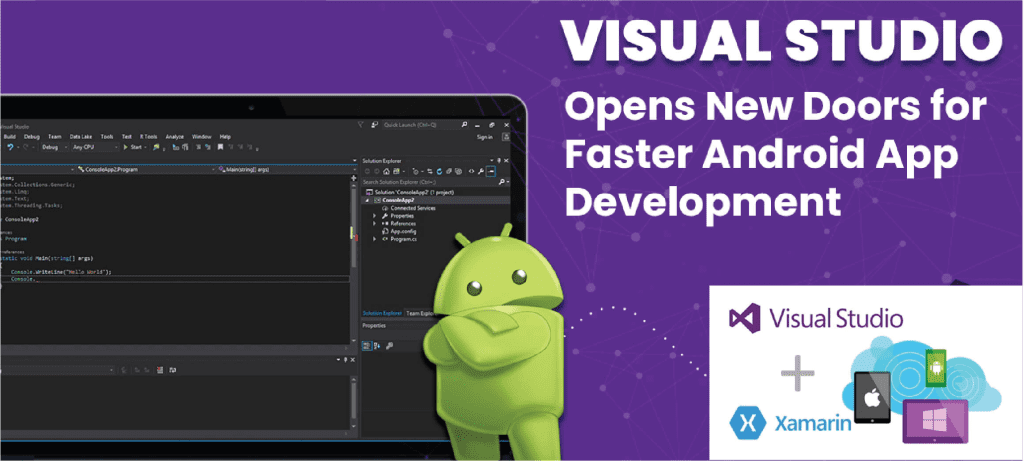
Xamarin, a framework within Microsoft’s Visual Studio, enables developers to build native Android, iOS, and Windows apps using a single C# codebase. With Xamarin, developers can write once and deploy across multiple platforms, saving time and resources.
Key Features:
- Native UI development: Xamarin.Forms allows developers to create user interfaces that look and feel native, tailored to the platform.
- Cross-platform code sharing: Developers can share up to 90% of their code between platforms, significantly reducing development time for apps targeting both Android and iOS.
- Comprehensive testing tools: Xamarin Test Cloud provides a way to test apps on thousands of real devices in the cloud, ensuring compatibility and stability.
- Enterprise-ready features: Xamarin offers advanced features like enterprise mobility solutions and integration with Microsoft Azure, making it suitable for large-scale business apps.
Vietnamese developers often work with startups and SMEs that have limited budgets but require apps for both Android and iOS. Xamarin is an excellent choice in such scenarios because it allows them to deliver high-quality apps at a lower cost.
3. Unreal Engine: High-End Graphics for Android Apps

Overview:
Unreal Engine isn’t just for creating games—it’s a powerful tool for any app that demands stunning visuals and immersive experiences. While it’s primarily associated with gaming, Unreal Engine is also used for applications in architecture, simulation, and interactive media.
Key Features:
- Photorealistic rendering: Unreal Engine’s rendering engine delivers jaw-dropping graphics, making it ideal for developers building games or apps requiring advanced 3D visuals.
- Blueprint visual scripting: This feature allows developers to create complex logic without writing a single line of code, making it accessible to non-coders and speeding up the development process.
- Advanced animation tools: Developers can create lifelike animations, which are particularly useful for games, simulations, and AR/VR applications.
- Multi-platform support: Unreal Engine supports Android alongside other platforms, ensuring developers can deliver a consistent experience across devices.
Vietnam’s gaming and AR/VR sectors are booming, and Unreal Engine is a favorite for developers working on visually demanding projects. Its ability to produce high-quality graphics aligns perfectly with the needs of clients seeking cutting-edge mobile apps.
4. Android Debug Bridge (ADB): The Ultimate Debugging Tool

Overview:
ADB is a command-line tool that facilitates communication between an Android device (or emulator) and a development computer. It’s an essential tool for testing and debugging Android applications during the development process.
Key Features:
- App debugging: ADB allows developers to inspect and debug apps in real time, whether they’re running on an emulator or a physical device.
- Command-line control: Developers can issue commands to install or uninstall apps, copy files, and retrieve logs directly from the command line.
- Real-time log monitoring: ADB’s logcat feature enables developers to monitor system and app logs, making it easier to identify and resolve issues.
- Device management: Developers can connect multiple devices simultaneously and manage them through ADB, making it ideal for testing apps on different hardware configurations.
Vietnamese developers often work on diverse projects that require extensive testing across multiple devices. ADB’s flexibility and power make it an indispensable tool for ensuring apps run smoothly on all target devices.
5. IntelliJ IDEA: The Versatile Java IDE

Overview:
IntelliJ IDEA, developed by JetBrains, is a powerful IDE known for its speed and productivity-enhancing features. While Android Studio is based on IntelliJ IDEA, the standalone version is still popular among developers for its flexibility and extensive plugin support.
Key Features:
- Smart code assistance: IntelliJ IDEA offers intelligent code completion, on-the-fly code analysis, and reliable refactoring tools.
- Extensive plugin ecosystem: Developers can enhance the IDE’s functionality with plugins for various programming languages, frameworks, and tools.
- Version control integration: Built-in support for Git, GitHub, and other version control systems makes collaboration easier.
- Support for multiple languages: While it’s primarily a Java IDE, IntelliJ IDEA supports a wide range of programming languages, including Kotlin, Python, and JavaScript.
Vietnamese developers value IntelliJ IDEA for its speed and adaptability, especially when working on projects that involve multiple programming languages. Its seamless integration with version control systems also simplifies team collaboration.
How This Knowledge Helps You Hire Android Developers
Now that you’re familiar with the tools developers in Vietnam rely on, how can this insight enhance your hiring process? Here are a few actionable tips:
- Ask the right questions: Focus on candidates’ experience with tools like Android Studio, ADB, Unreal Engine, or Xamarin during interviews. Dive into how they’ve used these tools to solve challenges.
- Evaluate their portfolios: Review the apps they’ve developed and ask for a walkthrough of their approach, including tool selection and problem-solving strategies.
- Test their skills: Use coding assessment or small projects to assess their proficiency in key tools, such as Kotlin with Android Studio or debugging with ADB.
With these steps, you can identify developers with the technical depth and tool expertise needed to deliver exceptional results.
Final Thoughts: Build the Dream Team

Whether you’re a startup aiming to make waves or an established business looking to expand, Vietnam’s Android development talent pool is worth exploring. By understanding the tools these developers rely on, you’re already one step ahead in hiring the right Android developer to bring your vision to life.
And hey, if this guide has sparked your interest in hiring Android developers from Vietnam, now’s the perfect time to dive in. Trust me, the results will speak for themselves.
Sharing practical perspectives on technology, talent acquisition and building stronger teams.



Join the conversation
Your email address will not be published. Required fields are marked *