Most Popular Android Development Tools Used by Developers in Vietnam: A Guide to Hire Android Developers 2025
By zoeynguyen
10 Feb 2025
If there’s one thing we can’t ignore in this fast-paced tech world, it’s the tools shaping the way developers build apps that run our lives. Whether you’re thinking about building the next big thing in mobile tech or planning to hire Android developers, understanding the tools developers love is crucial.
So, what are the most popular Android development tools used by developers in Vietnam? And more importantly, how can knowing this help you make smarter decisions when hiring an Android developer?
Read on because we’re about to dive deep into this exciting world, and trust me, it’s going to be worth your time. Let’s kick things off with some essential context.
Why Vietnam is a Hotspot for Android Development
In recent years, Vietnam has emerged as one of the most attractive markets for Android development talent. With a tech-savvy population, a booming startup scene, and competitive labor costs, this Southeast Asian country is becoming a go-to destination for businesses looking to hire Android developers.
Here are some key insights:
Impressive growth: The total revenue of Vietnam’s digital technology businesses reached nearly $158 billion in 2024, a 10.2% increase compared to the previous year. The ICT sector’s revenue is estimated to reach $169.3 billion in 2025, representing an 11.4% increase from 2024, underscoring the country’s accelerating growth and its successful positioning as a key player in the Asian tech market.
Outsourcing destination: With competitive labor costs and a combination of technical expertise and robust IT infrastructure, Vietnam has become a preferred outsourcing destination for global businesses. The country ranked 2nd in Southeast Asia as a preferred software outsourcing destination, a testament to its growing reputation and capabilities in the tech sector.
Developer demographics: The majority of Vietnam’s developers are between the ages of 25-29, making up nearly 30% of the sector, with those 20-24 years old close behind. This youthful majority brings a dynamic and flexible energy that’s pushing Vietnam’s tech growth. The industry is also supported by a strong core of experienced developers, with 28% being middle level and another 25% in senior & leader roles, ready to guide the sector to new heights.
Educational excellence: Supported by government efforts in STEM (Science, Technology, Engineering, and Mathematics) education at all levels, Vietnam’s IT education scene is brimming with possibilities and assistance, setting the stage for a future where Vietnamese tech experts are recognized for their creativity and skill.
To stay competitive in this market, developers here rely on cutting-edge tools to create sleek, user-friendly, and powerful Android applications. If you’re planning to build an Android app or hire an Android developer, knowing the tools that dominate this scene will give you a clear edge.
Top 5 Most Useful Android Development Tools
In the ever-evolving landscape of Android development, selecting the right tools is crucial for building efficient and high-quality applications. Here are 5 indispensable tools that developers in Vietnam frequently utilize:
1. Android Studio: The All-In-One IDE for Android Development
Overview: Android Studio, developed by Google, is the official Integrated Development Environment (IDE) for Android development. It’s the backbone of nearly every Android app development project, offering developers a complete suite of tools to design, code, debug, and test their applications. Since it’s designed specifically for Android, it provides unmatched support for app development on this platform.
Key Features:
Visual layout editor: The drag-and-drop interface allows developers to create UI layouts with ease. It includes a preview mode that lets developers see how the app will look on different devices and screen sizes.
Intelligent code editor: Android Studio supports advanced code completion, refactoring, and analysis for Java, Kotlin, and C++. This makes writing clean and optimized code easier.
Real-time profiling tools: Developers can analyze an app’s performance in real time, identifying memory leaks, CPU usage, and other bottlenecks.
Built-in Emulator: The Android Emulator lets developers test apps across a variety of devices and configurations without needing physical devices.
Developers in Vietnam love Android Studio for its seamless integration with other Google tools, robust debugging capabilities, and support for modern languages like Kotlin. Additionally, regular updates ensure compatibility with the latest Android OS features, keeping developers ahead of the curve.
2. Visual Studio – Xamarin: Cross-Platform Development Made Easy
Overview: Xamarin, a framework within Microsoft’s Visual Studio, enables developers to build native Android, iOS, and Windows apps using a single C# codebase. With Xamarin, developers can write once and deploy across multiple platforms, saving time and resources.
Key Features:
Native UI development: Xamarin.Forms allows developers to create user interfaces that look and feel native, tailored to the platform.
Cross-platform code sharing: Developers can share up to 90% of their code between platforms, significantly reducing development time for apps targeting both Android and iOS.
Comprehensive testing tools: Xamarin Test Cloud provides a way to test apps on thousands of real devices in the cloud, ensuring compatibility and stability.
Enterprise-ready features: Xamarin offers advanced features like enterprise mobility solutions and integration with Microsoft Azure, making it suitable for large-scale business apps.
Vietnamese developers often work with startups and SMEs that have limited budgets but require apps for both Android and iOS. Xamarin is an excellent choice in such scenarios because it allows them to deliver high-quality apps at a lower cost.
3. Unreal Engine: High-End Graphics for Android Apps
Overview: Unreal Engine isn’t just for creating games—it’s a powerful tool for any app that demands stunning visuals and immersive experiences. While it’s primarily associated with gaming, Unreal Engine is also used for applications in architecture, simulation, and interactive media.
Key Features:
Photorealistic rendering: Unreal Engine’s rendering engine delivers jaw-dropping graphics, making it ideal for developers building games or apps requiring advanced 3D visuals.
Blueprint visual scripting: This feature allows developers to create complex logic without writing a single line of code, making it accessible to non-coders and speeding up the development process.
Advanced animation tools: Developers can create lifelike animations, which are particularly useful for games, simulations, and AR/VR applications.
Multi-platform support: Unreal Engine supports Android alongside other platforms, ensuring developers can deliver a consistent experience across devices.
Vietnam’s gaming and AR/VR sectors are booming, and Unreal Engine is a favorite for developers working on visually demanding projects. Its ability to produce high-quality graphics aligns perfectly with the needs of clients seeking cutting-edge mobile apps.
4. Android Debug Bridge (ADB): The Ultimate Debugging Tool
Overview: ADB is a command-line tool that facilitates communication between an Android device (or emulator) and a development computer. It’s an essential tool for testing and debugging Android applications during the development process.
Key Features:
App debugging: ADB allows developers to inspect and debug apps in real time, whether they’re running on an emulator or a physical device.
Command-line control: Developers can issue commands to install or uninstall apps, copy files, and retrieve logs directly from the command line.
Real-time log monitoring: ADB’s logcat feature enables developers to monitor system and app logs, making it easier to identify and resolve issues.
Device management: Developers can connect multiple devices simultaneously and manage them through ADB, making it ideal for testing apps on different hardware configurations.
Vietnamese developers often work on diverse projects that require extensive testing across multiple devices. ADB’s flexibility and power make it an indispensable tool for ensuring apps run smoothly on all target devices.
5. IntelliJ IDEA: The Versatile Java IDE
Overview: IntelliJ IDEA, developed by JetBrains, is a powerful IDE known for its speed and productivity-enhancing features. While Android Studio is based on IntelliJ IDEA, the standalone version is still popular among developers for its flexibility and extensive plugin support.
Key Features:
Smart code assistance: IntelliJ IDEA offers intelligent code completion, on-the-fly code analysis, and reliable refactoring tools.
Extensive plugin ecosystem: Developers can enhance the IDE’s functionality with plugins for various programming languages, frameworks, and tools.
Version control integration: Built-in support for Git, GitHub, and other version control systems makes collaboration easier.
Support for multiple languages: While it’s primarily a Java IDE, IntelliJ IDEA supports a wide range of programming languages, including Kotlin, Python, and JavaScript.
Vietnamese developers value IntelliJ IDEA for its speed and adaptability, especially when working on projects that involve multiple programming languages. Its seamless integration with version control systems also simplifies team collaboration.
How This Knowledge Helps You Hire Android Developers
Now that you’re familiar with the tools developers in Vietnam rely on, how can this insight enhance your hiring process? Here are a few actionable tips:
Ask the right questions: Focus on candidates’ experience with tools like Android Studio, ADB, Unreal Engine, or Xamarin during interviews. Dive into how they’ve used these tools to solve challenges.
Evaluate their portfolios: Review the apps they’ve developed and ask for a walkthrough of their approach, including tool selection and problem-solving strategies.
Test their skills: Use coding assessment or small projects to assess their proficiency in key tools, such as Kotlin with Android Studio or debugging with ADB.
With these steps, you can identify developers with the technical depth and tool expertise needed to deliver exceptional results.
Final Thoughts: Build the Dream Team
Collaborative process of multicultural businesspeople using computer presentation and communication meeting brainstorming ideas about project colleagues working plan success strategy in modern office.
Whether you’re a startup aiming to make waves or an established business looking to expand, Vietnam’s Android development talent pool is worth exploring. By understanding the tools these developers rely on, you’re already one step ahead in hiring the right Android developer to bring your vision to life.
And hey, if this guide has sparked your interest in hiring Android developers from Vietnam, now’s the perfect time to dive in. Trust me, the results will speak for themselves.
Ready to hire remote software developers in Vietnam with us?
Hire Offshore PHP Developer in 2025: Costs, Essential Skills, and Hiring Strategies
By zoeynguyen
25 Dec 2024
Picture this: You’re building a killer web application, and you need that magic touch of a skilled PHP developer. But wait, isn’t PHP supposed to be old news? Not so fast! Contrary to some tech obituaries, PHP isn’t just surviving – it’s thriving. PHP remains a robust and relevant technology in web development, which power a stunning 77% of all websites globally in 2024. Major platforms like WordPress, Facebook, and Wikipedia continue to rely on PHP, proving its enduring power.
In today’s fast-paced tech landscape, finding the right PHP developer isn’t just about coding, it’s about finding a digital architect who can transform your web vision into reality. This guide will walk you through everything you need to know about hiring PHP developers in 2025.
What Exactly Are PHP Developers?
PHP developers are web programming specialists who create dynamic, interactive websites and applications using PHP – a server-side scripting language that’s been a web development staple for decades. PHP developers are tasked with various responsibilities, including:
Developing server-side web application logic
Creating and integrating databases
Building responsive web interfaces
Maintaining and optimizing existing web applications
Implementing security protocols
Skills to Hunt for When Hiring Offshore PHP Developers
When scouting for PHP talent, look beyond basic coding abilities. The ideal candidate brings a robust skill set:
How to Find offshore PHP Developers
Finding the right PHP developer can be challenging, but with the right approach, it becomes much easier. Here are some effective methods:
1. Freelance Platforms
There are numerous freelance platforms online where you can find ready-to-hire developers. Some platforms specifically cater to programmers and software engineers. Start by signing up on these platforms, then review PHP developers’ profiles and schedule interviews.
Popular freelance platforms include Upwork, Freelancer.com, and Fiverr.
2. Job Websites
Job boards are another excellent resource for finding PHP developers. While it might take some time to find the perfect candidate, these websites allow you to post detailed job ads or search for developers based on their profiles. Some well-known job websites are Indeed, Monster, and LinkedIn.
3. Recruiting Agencies
Recruitment agencies can help you find the right candidate for a specific role. Unlike offshoring, which involves hiring external teams, a recruitment agency helps you find full-time employees for your payroll.
Using a recruitment agency can save you time since they handle the initial screening of candidates, allowing you to interview only the most suitable ones.
4. Outsourcing Agencies
Outsourcing involves hiring an independent service provider for short-term tasks. It’s a quick way to get your web development work done: you delegate the task to the outsourcing agency, they complete it and send it back with an invoice. It’s a simple, efficient solution for temporary projects
Top 4 Countries Where You Can Hire Offshore PHP Developers
Here are four countries known for their large pools of skilled PHP development talent and competitive pricing:
Argentina
Argentina has become a top destination in the LatAm freelance market. The country offers skilled PHP developers with good English proficiency and time zone alignment with the US.
Vietnam
Vietnam has emerged as a premier destination for offshore development, distinguished by its cost-effectiveness and a robust pool of skilled IT professionals. Vietnamese developers are skilled at PHP and work on a range of projects thanks to its booming IT industry.
India
India is known for its large pool of software developers. Indian developers have deep technical expertise and are experienced with both simple and large-scale PHP projects.
Mexico
Currently, Mexico is the third-largest exporter of IT services worldwide.Mexico’s proximity to the US also offers advantages in time zone overlap, making communication and project management easier.
Vietnam – one of the most cost-effective offshore development countries. What makes it stand out?
Cost-Effectiveness
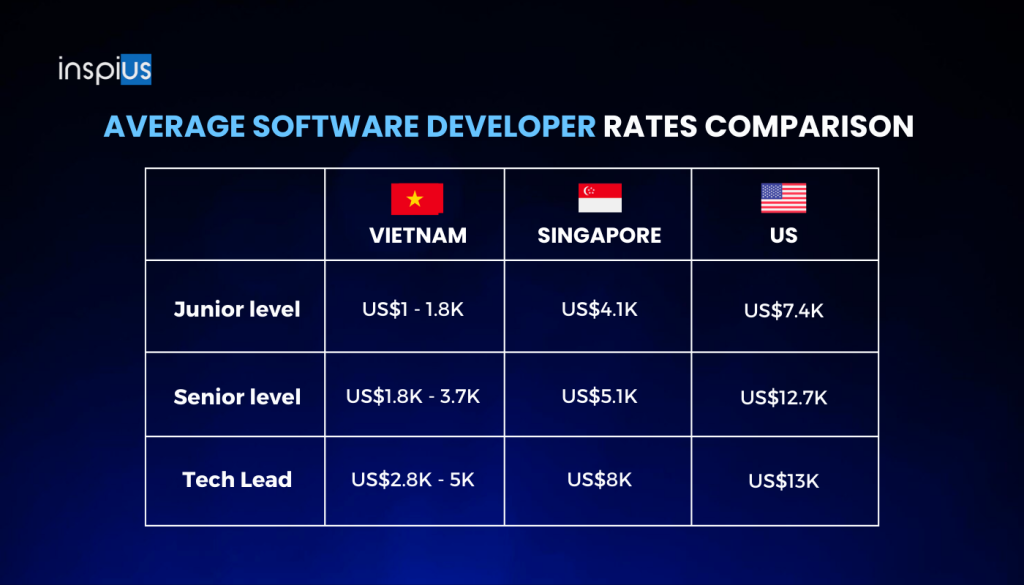
Compared to tech-hub countries like Singapore and the US, the cost of hiring PHP developers in Vietnam is significantly lower, making it an attractive option for companies looking to optimize their development budgets without sacrificing quality.
In the United States and Singapore, the high cost of living and competitive tech markets drive up the salaries of IT professionals. Hiring a software developer in these countries can be prohibitively expensive for startups and established companies alike. In contrast, Vietnam’s economic structure and growing tech ecosystem offer a more cost-effective solution.
The average salary for a software developer in Vietnam is a fraction of what it would be in the US or Singapore, allowing businesses to allocate resources more efficiently and invest in additional project development or expansion.
Most popular PHP frameworks used by developers in Vietnam
The popularity of PHP frameworks among developers in Vietnam reflects global trends, with several frameworks standing out due to their features and community support. Here are the most popular PHP frameworks used by developers in Vietnam:
1. Laravel
Laravel is the most widely used PHP framework, with over 75% of developers in Vietnam preferring it, making it a favorite for its elegant syntax and robust ecosystem. It offers a powerful MVC architecture, built-in authentication, routing, and templating capabilities, which streamline web development.
2. Symfony
Symfony is the second most popular framework, utilized by about 15% of PHP developers. It is favored for its flexibility and extensive components that can be used independently. Known for its reusable components and strong community support, Symfony is often used in large-scale applications and integrates well with other projects like Drupal.
3. CodeIgniter
CodeIgniter remains a popular choice due to its lightweight nature and straightforward setup process. It has been a staple in PHP development for over a decade. Its simplicity allows for rapid development without extensive configuration, making it suitable for smaller projects.
4. CakePHP
CakePHP is appreciated for its convention over configuration approach, making it easier to develop applications quickly while maintaining code quality. It offers built-in validation and security features that help streamline the development process.
5. Yii Framework
Yii is recognized for its performance and is particularly effective for developing high-performance web applications. It employs lazy loading and provides a clear object-oriented structure, along with strong AJAX support through jQuery integration.
These frameworks not only enhance productivity but also provide robust solutions for various types of web applications, contributing to their widespread adoption among Vietnamese developers.
Vietnamese developers Demographics
Vietnam has become a fertile ground for cultivating tech talent. In 2024, the number of software engineers in Vietnam is around 530,000, with universities and private institutions producing about 57,000 IT professionals annually.
The majority of Vietnam’s developers are between the ages of 25-29, making up nearly 30% of the sector, with those 20-24 years old close behind. This youthful majority brings a dynamic and flexible energy that’s pushing Vietnam’s tech growth. The industry is also supported by a strong core of experienced developers, with 28% being middle level and another 25% in senior & leader roles, ready to guide the sector to new heights.
Educational Background
Most PHP developers hold at least a bachelor’s degree in fields related to computer programming or information technology. The Vietnamese education system produces around 57,000 IT graduates annually from various universities and vocational institutions. Vietnam’s combination of a youthful workforce, competitive salaries, and a strong educational foundation positions it as a key player in the global software development market, particularly for PHP development.
A notable 85% of these new professionals have at least a bachelor’s degree in IT fields, showing that the workforce is not just large, but well-educated. This level of education is crucial as it lays a foundation for advanced skills and specialized knowledge in the tech industry.
Saving 30-50% your budget & effort when hiring offshore PHP Developers
Hiring a PHP development team from another country can be time-consuming. Dealing with local labor laws, taxes, and employee benefits can be a lot to handle.
But don’t worry, we’re here to make it easier for you to tap into the amazing tech talent in Vietnam – one of the most cost-effective destinations for offshore development. For over 8 years, we’ve been working with startups and companies in Singapore and the US. We help them find and assess the right candidates for their tech teams, all while keeping costs in check
Hiring a PHP developer in the US with around 2 years of experience costs approximately US$7400/month. While starting from US$1000, you’ll get a skilled remote PHP developer in Vietnam who:
Has at least 2+ years of working experience
Matches your requirements in both Technical skills and English
Will be working remotely as your full-time employee and under our management from Vietnam
Curious about how it all works? Contact us right away!
Ready to hire remote software developers in Vietnam with us?
The gaming industry is booming thanks to a rising demand for immersive and exciting experiences. As the industry grows, so does the need for talented game developers, but their rates can vary widely. This guide will help you understand average developer salaries around the world, the factors that affect these rates, and what to consider when hiring offshore game developers.
Why Game Developers are in high demand?
Global video game market value from 2022 to 2032
The global video game industry is a huge and thriving business, with $350 billion in revenue in 2022. Mobile gaming contributed a substantial $248 billion of that total. As technology advances, the gaming landscape keeps evolving, presenting new opportunities for developers. Innovations like cloud gaming and virtual reality (VR) are creating exciting ways to make games more interactive and immersive, offering players experiences like never before.
This rapid growth is driven by the increasing number of gamers and a broader gaming landscape, with an estimated 3.8 billion gamers expected worldwide by 2030. To keep up with this growing demand, there’s a strong need for developers who can create innovative and engaging games.
The rise of diverse gaming platforms has opened up more opportunities for developers. With over 3.2 billion gamers around the world, developers now have a wider range of projects to tackle. Each platform, whether mobile, console, or PC, presents unique challenges, making developers with experience across multiple systems especially in demand.
Factors that affect Game Developers rates
When it comes to game developer rates, several key factors come into play:
Experience and Expertise
How skilled and experienced a game developer is perhaps the most significant factor impacting their rate. Junior developers, or those with limited experience, usually have lower rates due to their relatively narrow skill set and might need a bit more guidance. On the other hand, senior developers with a wealth of experience, specialized knowledge, advanced skills in areas like VR/AR, and a proven track record of successful projects can negotiate higher rates.
Geographic Location
Where a developer is based can make a big difference in cost. For example, developers from North America and Western Europe often have higher rates due to higher living costs. On the other hand, developers in Eastern Europe or Asia might offer more competitive pricing. Popular offshore destinations such as India or Vietnam often offer competitive pricing due to lower labor costs and a large pool of skilled IT talents.
English language proficiency
Effective communication is essential for the success of any offshore development project. Game developers who are proficient in English can usually demand higher rates due to the ease of smoother conversations and cutting down on any misunderstandings.
Being able to clearly share ideas, get what the project needs, and work well with different teams is highly valued and often reflected in a developer’s rate.
Project Complexity and Scope
The bigger and more complicated a software development project is, the more it’s likely to cost. Large-scale, intricate projects that require extensive planning, research, and technical prowess are likely to come with higher costs. Also, if a project keeps changing or has super tight deadlines, it’s going to need more resources. That means higher rates to make sure everything gets done right and on time.
Type of Employment
Freelancers may set their rates depending on how complex the project is, how long it’ll take, and how flexible their schedule is. Contracted developers working through outsourcing agencies usually have their rates set by the agency, which includes an extra charge for the agency’s services. Full-time offshore employees might have a different way of setting rates, considering things like benefits and the costs that come with a full-time job. Each type of employment has its own set of expectations and costs, which plays a part in how much they charge overall.
What is the average salary of Game Developers?
When considering the average salary of game developers globally, there are notable differences based on geographical location. In popular offshore destinations, the costs can be significantly lower compared to major tech hubs.
United State
Average salary of Game Developers in the United States (monthly)
On average, junior game developers in the US earn around $7400 per month, middle developers— $12700; and senior developers—$13000.
Average salary of Game Developers in Singapore (monthly)
The median income for software developers in the Philippines is around $1500/month. Junior developers earn around $1000 per month, middle developers— $1500; and senior developers—$2000 per month.
Average salary of Game Developers in Vietnam (monthly)
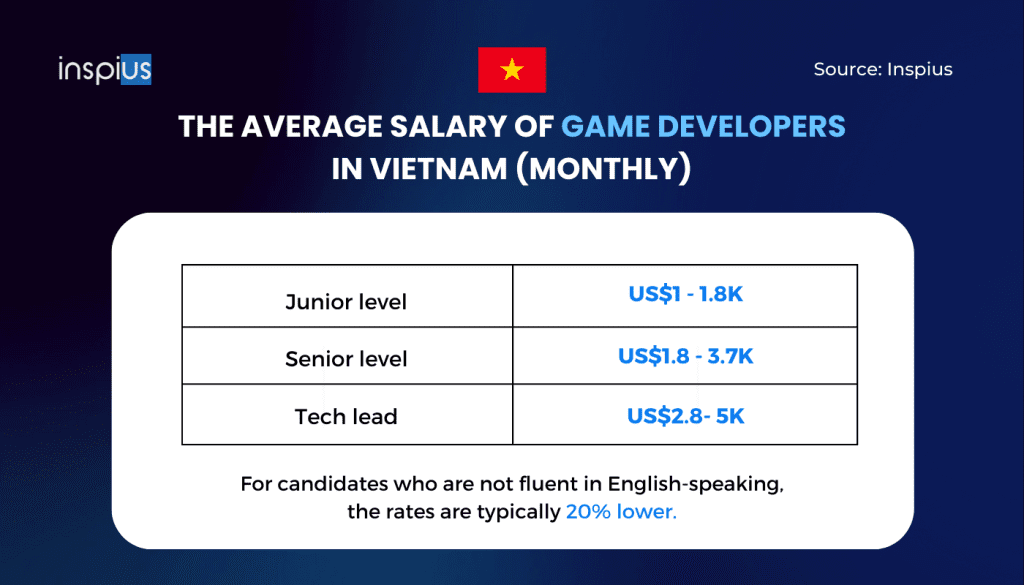
In Vietnam, the average salary for junior-middle developers is $1000-$1800 per month, senior developers —$1800-$3700 per month, and tech lead—$2800-$5000/month. These salaries are specifically for professionals who are proficient in English. For candidates who are not fluent in English, the rates are usually 20% lower.
Average salary of Game Developers in Poland (monthly)
The median income for Poland Game developers is $3282 per month. Junior developers $1500-$2400/month, middle level earn around $2400-$4500 per month. Senior developers can make up to $6700 per month, and technical lead —$3600-$6600/month.
Source: Bulldogjob
Brazil
Average salary of Game Developers in Brazil (monthly)
The median income for remote Game developers in Brazil is between US$24,000 and US$100,000 per year. Junior developers make around $2000-$3500 per month, middle developers—$3500-$5800, and senior developers—$5800-$8300. These salary ranges are inclusive of benefits (if hiring on payroll), or in lieu of benefits (if hiring contractors), and only takes into consideration professionals with working English proficiency.
Source: Tecla
Vietnam – one of the most cost-effective offshore development countries: What makes it stand out?
Cost-Effectiveness
Vietnam has emerged as a premier destination for offshore development, distinguished by its cost-effectiveness and a robust pool of skilled IT professionals. Compared to tech-hub countries like Singapore and the US, the cost of hiring Game developers in Vietnam is significantly lower, making it an attractive option for companies looking to optimize their development budgets without sacrificing quality.
Source: Inspius, Talentport, Builtin
In the United States and Singapore, the high cost of living and competitive tech markets drive up the salaries of IT professionals. Hiring a software developer in these countries can be prohibitively expensive for startups and established companies alike. In contrast, Vietnam’s economic structure and growing tech ecosystem offer a more cost-effective solution.
The average salary for a software developer in Vietnam is a fraction of what it would be in the US or Singapore, allowing businesses to allocate resources more efficiently and invest in additional project development or expansion.
Proficient workforce in technology
Vietnam has become a fertile ground for cultivating tech talent. In 2024, the number of software engineers in Vietnam is around 530,000, with universities and private institutions producing about 57,000 IT professionals annually.
On the global stage, Vietnam developers have achieved many international recognition such as ranking 10th globally in producing the most engineers and 2nd in the Best Freelancers Survey, demonstrating their competitive edge.
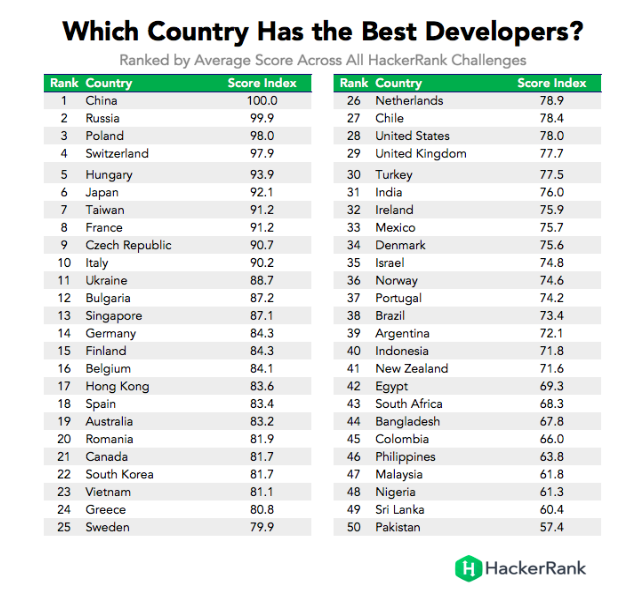
HackerRank places Vietnam at 23rd worldwide in developer skills, indicating a robust capability to tackle complex coding challenges. This overall skill set makes Vietnamese software developers a valuable asset for tech projects requiring cutting-edge expertise and innovation.
Saving 30-50% your budget & effort when hiring offshore Game Developers
Hiring a game development team from another country can be time-consuming. Dealing with local labor laws, taxes, and employee benefits can be a lot to handle.
But don’t worry, we’re here to make it easier for you to tap into the amazing tech talent in Vietnam – one of the most cost-effective destinations for offshore development. For over 8 years, we’ve been working with startups and companies in Singapore and the US. We help them find and assess the right candidates for their tech teams, all while keeping costs in check
Hiring a Game developer in the US with around 2 years of experience costs approximately US$7400/month. While starting from US$1000, you’ll get a skilled remote Game developer in Vietnam who:
Has at least 2+ years of working experience
Matches your requirements in both Technical skills and English
Will be working remotely as your full-time employee and under our management from Vietnam
Curious about how it all works? Contact us right away!
Ready to hire remote software developers in Vietnam with us?
Seeking Cost-Effective Remote Golang Developers? Discover Which Country Excels in Asia
By zoeynguyen
2 Aug 2024
Golang Development Overview
Golang, also known simply as Go – one of the top programming languages that developers hold dear. Go was created in 2007 by a team of Google engineers and has become a statically typed, easy-to-use programming language that allows developers to spot mistakes in early development stages, makes it easier to deploy the apps and speeds up the process of getting software to users.
Companies and individual developers alike are turning to Golang for its robust performance and ease of use. According to Stackshare, over 2843 companies globally have reportedly used Go in their tech stacks, showcasing its extensive use across various industry sectors.
How many Golang developers around the world?
As of 2022, estimates suggest that there are between 1.6 to 2.5 million Golang developers globally. This range highlights the growing popularity of Golang and its adoption across various sectors of the tech industry. This figure represents approximately 10% of the global development talent pool, underscoring the significant footprint Golang has made in the software development landscape.
In terms of geographical distribution, Asia stands out as the region with the highest number of Golang developers. In 2021, it was reported that 570,000 professionals in Asia claimed Go as their primary programming language. This statistic not only reflects the vast potential of the Asian tech market but also the global reach of Golang.
Asia – a global hotspot for Golang developers
Asia has become a key player in software development globally, thanks to its vast and vibrant community of skilled developers. The continent’s leading role in technology, along with quick tech progress and a focus on education and training, provides an ideal environment for Golang to flourish.
Some top places in Asia to find offshore Golang developers should be mentioned are China, The Philippines, India, Indonesia and Vietnam.
These countries stand out not only for their impressive tech talent pools, cultivated from STEM education through to professional practice, but also for their cost-effectiveness, making them preferred choices for businesses seeking offshore Golang expertise.
While Asia stands as a premier destination for Golang development, owing to its vast pool of talented developers, the region presents varied levels of English proficiency across different countries. This linguistic aspect is crucial for global companies considering offshore Golang development, as effective communication is key to the success of international projects.
Let’s delve into the English proficiency rankings of the popular Asian countries for Golang development:
The Philippines (Rank #20)
The Philippines, holding the 20th position globally for English proficiency, emerges as an ideal location for companies seeking offshore developers. The general population’s strong English skills facilitate clear communication, streamlining business interactions and collaborations with international firms. This linguistic advantage ensures efficient and effective operations for those looking to partner with Filipino talent.
Vietnam (Rank #58) & India (Rank #60)
Vietnam’s and India’s English proficiency is moderate overall but in practice has little technical focus on the language. According to the EF English Proficiency Index 2023 (EPI), Vietnam secured the 7th spot in Asia and ranked 58th worldwide, and India stood at 9th spot in Asia and 60th globally. While English proficiency may not be highly technical, this level of competence, coupled with the nation’s adaptability to various business cultures, enables effective communication and collaboration with international clients and partners.
Indonesia (Rank #79) & China (Rank #82)
Landing at 79th and 82th in the world, Indonesia’s and China’s English proficiency levels are considered low. In both countries, despite their large populations, only a relatively small segment is proficient in English. This presents a significant challenge for companies that rely on English for primary communication. Such a language gap can impact multiple facets of software development, including comprehending technical specifications and collaborating with international teams.
Salary guide for hiring remote software developers in Asia
When considering hiring remote Golang developers from Asia, understanding the salary landscape is crucial for budgeting and decision-making. The region presents a wide range of average salaries, influenced by factors such as local economic conditions, the demand for technology professionals, and the level of expertise and experience of the developers.
Below is a comparative overview of the average Golang developer rates in popular offshore software development countries in Asia: China, The Philippines, India, Indonesia and Vietnam.
China
On average, software developers in China earn around $4000 per month. Junior developers earn around $2900 per month, middle developers— $4000; and senior developers—$5100.
The median income for software developers in the Philippines is around $1500/month. Junior developers earn around $1000 per month, middle developers— $1500; and senior developers—$2000 per month.
On average, software developers in India earn an average of $2600 per month. Junior developers earn around $1800 per month, middle developers— $2600; and senior developers—$3300.
According to Glassdoor, the estimated total pay for a software developer in Vietnam is $1721 per month (including base pay and additional pay). The average salary for junior-middle developers is $1000-$1800 per month, senior developers —$1800-$3700 per month, and tech lead—$2800-$5000/month.
These salaries are specifically for professionals who are proficient in English. For candidates who are not fluent in English, the rates are usually 20% lower.
Vietnam – one of the most cost-effective offshore development countries: What makes it stand out?
Cost-Effectiveness
Vietnam has emerged as a premier destination for offshore development, distinguished by its cost-effectiveness and a robust pool of skilled IT professionals. Compared to tech-hub countries like Singapore and the US, the cost of hiring Golang developers in Vietnam is significantly lower, making it an attractive option for companies looking to optimize their development budgets without sacrificing quality.
In the United States and Singapore, the high cost of living and competitive tech markets drive up the salaries of IT professionals. Hiring a software developer in these countries can be prohibitively expensive for startups and established companies alike. In contrast, Vietnam’s economic structure and growing tech ecosystem offer a more cost-effective solution.
The average salary for a software developer in Vietnam is a fraction of what it would be in the US or Singapore, allowing businesses to allocate resources more efficiently and invest in additional project development or expansion.
Proficient workforce in technology
Vietnam has become a fertile ground for cultivating tech talent. In 2024, the number of software engineers in Vietnam is around 530,000, with universities and private institutions producing about 57,000 IT professionals annually.
On the global stage, Vietnam developers have achieved many international recognition such as ranking 10th globally in producing the most engineers and 2nd in the Best Freelancers Survey, demonstrating their competitive edge.
HackerRank places Vietnam at 23rd worldwide in developer skills, indicating a robust capability to tackle complex coding challenges. This overall skill set makes Vietnamese software developers a valuable asset for tech projects requiring cutting-edge expertise and innovation.
Save 30-50% for each hire with remote Golang developers in Vietnam
Hiring a Golang developer in the US with around 2 years of experience costs approximately US$7400/month. While starting from US$1000, you’ll get a skilled remote Golang developer in Vietnam who:
Has at least 2+ years of working experience
Matches your requirements in both Technical skills and English
Will be working remotely as your full-time employee and under our management from Vietnam
Keen to see how it works? Book a meeting with our technical recruiters now!
Ready to hire remote software developers in Vietnam with us?
Build Tech Team in Vietnam: Key Reasons to Consider
By zoeynguyen
8 Jun 2024
From high-quality candidates to competitive costs, here’s why Singapore & US companies should consider building a tech team in Vietnam.
Tech team in Vietnam: Skilled software engineering population
Vietnam has emerged as a significant hub for tech talent development. As of 2024, the country boasts approximately 530,000 software engineers, with around 57,000 IT professionals graduating annually from both universities and private institutions.
On the global stage, Vietnam developers have achieved many international recognition, securing the 10th place worldwide in terms of engineering output and ranking 2nd in the Best Freelancers Survey, showcasing their competitive prowess.
Data from Global Skills Index 2020 Report, published by Coursera, an online learning platform used by global learners for higher education, also rated Vietnamese technology skills 2nd in Asia Pacific and 22nd globally.
Vietnam ranked #2 in the region and #22 globally in tech skills, Coursera Global Skills Index Report, 2020
All the above indicate a competitive engineering workforce that has been emerging constantly in Vietnam.
Tech team in Vietnam: Competitive supply of software developers
While hiring software engineers in Singapore and the US is getting costly, Vietnam has been recognized as a cost-attractive tech talent hub in Southeast Asia. According to Glassdoor.com, a career website, generally, hiring a software developer in the US with around 2 years of experience costs approximately US$7400/month. While starting from US$1000, you’ll get a skilled remote Golang developer in Vietnam who:
Has at least 2+ years of working experience
Matches your requirements in both Technical skills and English
Will be working remotely as your full-time employee and under our management from Vietnam
Even when your budget allows, you may not find the right talent in Singapore and the US. A report from jobs site Indeed showed software engineers faced the greatest talent shortage among all roles in Singapore, which is foreseen uneasy to change in the next couple of years. Singapore will need 60,000 professionals over the next three years, yet there are less than 9,000 graduates in this same time frame coming out of university and higher education programmes.
On the other hand, Vietnam has become a fertile ground for cultivating tech talent, with an impressive number of students pursuing degrees in computer science and IT each year. This huge number of young graduates, combined with improved internet connectivity, has led Vietnam to a thriving tech hub recently.
Tech team in Vietnam: Seamless communication with Singapore & US companies
Many Singapore & US businesses are concerned about the language barrier when considering offshoring to Vietnam. Vietnamese software developers in general face greater challenges in speaking English compared to their counterparts in India and the Philippines. That said, it is still entirely feasible to hire software developers in Vietnam who are competent in both coding and English as long as you have the right tech recruiting partner.
Vietnam’s English proficiency is moderate overall, emphasizing practical use over grammar depth. According to the EF English Proficiency Index 2023 (EPI), Vietnam secured the 7th spot in Asia and ranked 58th worldwide. While English proficiency may not be highly technical, this level of competence, coupled with the nation’s adaptability to various business cultures, enables effective communication and collaboration with international clients and partners.
Build tech team in Vietnam: Bottom line
Are you struggling to hire software engineers in Singapore & US? Consider giving Vietnam software developers a try.
Having more than five years of experience helping Singapore & US companies hire and manage remote software engineers in Vietnam, Inspius is where you can rely on finding the right fits, from technical competencies to language proficiencies.
Top Manpower Concerns for Singapore Businesses in 2024
By zoeynguyen
31 May 2024
Singapore’s tech industry is rapidly expanding, driven by advancements in technology and increasing digital transformation across sectors. As businesses strive for innovation and competitiveness, the demand for tech talent has surged, presenting significant hiring challenges.
According to the Singapore Business Federation’s latest National Business Survey (NBS) 2023/2024, top challenges that businesses need to tackle are manpower related: availability (53%) and retention (42%) of manpower, as well as foreign workforce policies (39%).
This article delves into the top Manpower Concerns for Singapore in 2024, examining how these challenges impact the industry and business growth.
Top Manpower Concerns 01: Talent shortage
The tech industry is growing rapidly, and we can anticipate a rising demand for new IT job opportunities in the near future. However, there is still a significant shortage of local talent to fill these roles. According to new research by Morgan McKinley, 76% of technology hiring managers in Singapore found recruitment to be ‘very’ or ‘quite’ competitive in 2023. By 2025, Singapore will require another 1.2 million digitally skilled workers to meet economic demands, representing a 55% increase from the current 2.2 million in the workforce.
Another report from The Talent Shortage 2024 said, 79% of employers in Singapore are facing difficulties in filling roles in 2024. Although this is slightly down from 83% in 2023, it still represents a significant challenge. This ongoing issue highlights the importance of skilled talent in shaping the future.
Large organizations, especially those with over 5000 employees, report the highest difficulty in filling roles, with 85% struggling to find suitable candidates. The IT industry is particularly affected, facing the highest talent shortage at 88%. These figures underscore the urgent need for companies to develop effective strategies to attract and retain skilled workers, ensuring they can overcome these challenges and achieve their business goals.
In 2024, businesses in Singapore are grappling with a significant challenge: escalating business costs, with 75% citing manpower expenses as a primary concern. This financial pressure is further exacerbated by a notable trend identified in a recent Robert Walters survey, which highlights substantial salary increases for tech professionals. As the demand in sectors like AI and sustainable development continues to surge, tech talents are expected to see salary hikes ranging from 10-15%, and even up to 25% in areas facing severe talent shortages. This rise in compensation reflects the intense competition for skilled tech personnel and underscores the urgent need for adept professionals in a competitive market.
Amidst these economic pressures, Singapore confronts another critical issue common among developed nations—an ageing population and a dwindling birth rate. These demographic challenges slow the development of local tech expertise, a process that cannot keep pace with the rapid demand for skilled workers.
Top Manpower Concerns 02: Employee retention
Retaining tech talent is just as crucial as attracting it. Major tech companies, startups, and traditional businesses undergoing digital transformation fiercely compete for the best professionals. This competition drives up salaries and benefits, making it challenging for smaller companies to attract and retain top talent.
Research by Morgan McKinley also highlights in 2024, 46% of tech talents are actively seeking new jobs, with another 31% considering a move. For IT employees planning to switch their job, a higher salary is the top priority (40%), followed by career growth and development opportunities (14%), and the ability to work remotely (13%).
Work from home’ and flexible working hours are highly valued, ranking first and third respectively among the top five benefits chosen by professionals. Notably, 71% of technology professionals listed ‘work from home’ as one of their top five benefits.
To address these challenges, companies are increasingly adjusting their benefits packages to better satisfy employee preferences. Offering competitive salaries is essential, but equally important is providing career development opportunities and flexible working arrangements. By understanding and responding to the evolving needs of their workforce, companies can improve their ability to attract and retain top tech talent, ensuring they remain competitive in the rapidly evolving tech industry.
Top Manpower Concerns 03: AI skills gap
The pace of AI transformation in Singapore is remarkable, with 94% of employers envisioning their companies becoming AI-driven organizations by 2028. While the majority (91%) believe their IT departments will be the primary beneficiaries, they also foresee significant value being derived from AI in business operations (90%), research and development (89%), finance (89%), sales and marketing (86%), legal (83%), and human resources (81%).
However, AWS points out that addressing the critical AI skills gap is essential for fully realizing the productivity benefits of AI. Hiring AI-skilled talent is a priority for over 81% of Singapore employers, yet 74% can’t find the AI talent they need. Additionally, there is a training awareness gap, with 82% of employers indicating they do not know how to implement an AI workforce training program. Meanwhile, 78% of workers are unsure about relevant career paths where AI skills are applicable.
These findings underscore the need for greater collaboration between governments, industries, and educators. Such partnerships can help employers across Singapore implement effective AI training programs and assist workers in aligning their AI skill sets with appropriate roles, thereby maximizing the benefits of AI adoption.
Top Manpower Concerns 04: Foreign manpower challenges
The survey by the Singapore Business Federation highlights several key issues contributing to foreign manpower challenges: 70% of businesses reported that changes to the S Pass qualifying salary present a major hurdle, with this concern echoed by both SMEs (70%) and large companies (68%). Additionally, 65% of businesses are impacted by changes to the Employment Pass (EP) qualifying salary, making it increasingly difficult to hire mid-skilled and high-skilled foreign workers.
The report also outlines the significant foreign manpower challenges faced by various sectors, with a particular focus on the IT & Professional Services sector:
Changes to Employment Pass (EP) Qualifying Salary
88% of businesses in the IT & Professional Services sector reported that changes to the EP qualifying salary are a major challenge. This is the highest among all sectors, indicating a substantial impact on the ability to hire highly skilled foreign professionals.
The EP is crucial for attracting top-tier talent, and the increased qualifying salary makes it harder for companies to meet the required criteria, exacerbating the talent shortage.
Changes to S Pass Qualifying Salary
63% of businesses in the IT sector are affected by changes to the S Pass qualifying salary. While this is lower than some other sectors like Manufacturing (79%) and Construction & Civil Engineering (83%), it still represents a significant hurdle.
The S Pass is designed for mid-skilled workers, and the increased salary requirements can limit the pool of available foreign talent.
Other Challenges
33% of IT businesses reported issues with the tightening of the overall Dependency Ratio Ceiling (DRC) for Work Permits and S Passes, which limits the proportion of foreign workers a company can hire.
37% indicated challenges with revisions in the S Pass sub-DRC quota.
12% are unable to employ Work Permit holders from specific source countries, although this is a smaller issue compared to other sectors.
These statistics highlight the significant impact of regulatory changes on the IT sector’s ability to attract and retain foreign talent, which is crucial for its continued growth and innovation. The tightening of these policies underscores the need for more effective strategies to develop local talent while balancing the requirements for foreign expertise.
Conclusion
Tech hiring in Singapore faces numerous challenges in 2024, including talent shortages, skill gaps, intense competition, and regulatory changes. Addressing these issues is crucial for businesses to build a strong tech workforce and stay competitive in an ever-evolving digital landscape.
By understanding and anticipating these challenges, companies can develop effective strategies to navigate the complex tech hiring environment. Leveraging services like hiring remote tech talent can help bridge the talent gap and support sustained growth and innovation, ensuring businesses thrive in the rapidly evolving tech sector.
Hire Vietnam Mobile App Developers: Top 4 Insights You Need to Know 2024
By zoeynguyen
19 Feb 2024
Hire Vietnam App Developers – Overview of the Vietnam IT market
Vietnam’s software development market has experienced significant growth recently, gaining recognition as a hub for strong tech talent in SEA. This has positioned Vietnam as an increasingly appealing destination for businesses looking for cost-effective software development outsourcing or hiring offshore software engineers. Here are some key insights and statistics about Vietnam IT market:
Impressive Growth Vietnam’s IT sector has reached a new milestone with revenues hitting US$69 billion in 2023. This impressive figure underscores the country’s accelerating growth and its successful positioning as a key player in the Asian tech market.
Outsourcing Destination With competitive labor costs and a combination of technical expertise and robust IT infrastructure, Vietnam has become a preferred outsourcing destination for global businesses. According to TopDev, Vietnam ranked 2nd in Southeast Asia as a preferred software outsourcing destination, a testament to its growing reputation and capabilities in the tech sector.
Developer Demographics: A young and dynamic workforce The majority of Vietnam’s developers are between the ages of 25-29, making up nearly 30% of the sector, with those 20-24 years old close behind. This youthful majority brings a dynamic and flexible energy that’s pushing Vietnam’s tech growth. The industry is also supported by a strong core of experienced developers, with 28% being middle level and another 25% in senior & leader roles, ready to guide the sector to new heights.
Furthermore, Vietnam holds the 10th position in the world for its quality developer workforce, trailing just behind technological powerhouses like the USA, UK, and France.
Hire Vietnam App Developers: What makes Vietnam developers stand out from the crowd?
Vietnam’s mobile developers are making a splash in the global tech scene. They stand out for their sharp skills, quick learning and a strong grasp of the latest tech to deliver top-notch mobile applications. Let’s dive into what makes Vietnam mobile developers shine in the fast-paced world of mobile development:
Educational Excellence
Supported by government efforts in STEM (Science, Technology, Engineering and Mathematics) education at all levels of education, Vietnam’s IT education scene is brimming with possibilities and assistance, setting the stage for a future where Vietnamese tech experts are recognized for their creativity and skill.
Vietnam has become a fertile ground for cultivating tech talent, with an impressive number of students, between 50,000 to 57,000, pursuing degrees in computer science and IT each year. This underscores the growing interest and need for technology expertise in the workforce in Vietnam.
A notable 85% of these new professionals have at least a bachelor’s degree in IT fields, showing that the workforce is not just large, but well-educated. This level of education is crucial as it lays a foundation for advanced skills and specialized knowledge in the tech industry.
Regarding mobile developers, most of them, about 71.7%, have a bachelor’s degree. Others have gone further to get master’s degrees, and Ph.Ds, with a small portion exploring alternative educational routes like bootcamps and online courses, making for a diverse group of experts.
On the global stage, data from the Global Skills Index 2020 Report by Coursera (a world-wide online learning platform) rated Vietnamese technology skills 2nd in Asia Pacific and 22nd globally. These impressive rankings showcase their commitment to learning and the high-quality skills they’re gaining through online education platforms.
Advanced Coding Skills
According to data from the Vietnam Tech Talent Report, the most popular languages among mobile developers include Java, which a significant 49.30% utilize, followed by Swift at 19.70%, reflecting a strong focus on both Android and iOS platforms. Flutter & React Native are also gaining traction, pointing to a growing interest in cross-platform development. Integrated Development Environments (IDEs) and code editors like Visual Studio Code and Android Studio are also widely adopted.
On the global stage, Vietnam developers have achieved many international recognition such as ranking 10th globally in the Best Developers Survey and 2nd in the Best Freelancers Survey, demonstrating their competitive edge.
HackerRank places Vietnam at 23rd worldwide in developer skills, indicating a robust capability to tackle complex coding challenges. This overall skill set makes Vietnamese mobile developers a valuable asset for tech projects requiring cutting-edge expertise and innovation.
Proficiency in English
Vietnam’s English proficiency is moderate overall, emphasizing practical use over grammar depth. According to the EF English Proficiency Index 2023 (EPI), Vietnam secured the 7th spot in Asia and ranked 58th worldwide. While English proficiency may not be highly technical, this level of competence, coupled with the nation’s adaptability to various business cultures, enables effective communication and collaboration with international clients and partners.
Vietnamese developers show a wide range of English proficiency, with the two largest groups at advanced (37%) and intermediate (27%) levels. These two groups together form a significant majority, reflecting a substantial capacity within the Vietnamese developer community to engage with the global tech market and can communicate effectively in professional contexts. A smaller proportion have full proficiency (9%), or elementary skills (23%), and a minimal segment (4%) lacks English abilities.
To give you a clearer picture of the English proficiency among Vietnamese mobile developers, here’s a short English interview with one of Inspius’s candidate who exemplifies the Upper-Intermediate level of English skill:
Cost-Effectiveness
The salary landscape for hiring mobile developers in Vietnam highlights cost-effective options for hiring. Junior candidates can expect to earn between $1,000 and $1,800 monthly, while seniors see $1,800 to $3,700, and tech lead $2,800 to $5000. For roles that don’t require English proficiency and instead utilize chat-based communication, you could potentially save 20% on your budget.
The salary distribution offers a competitive edge for companies hiring in Vietnam due to relatively lower talent costs compared to many countries (US, Singapore,..). The salary may be affected by regions within Vietnam and differences in work arrangements, as well as the impact of English proficiency. For businesses looking to expand globally or build remote teams, Vietnam’s tech talent pool is definitely a financially viable and attractive market.
Hire Vietnam App Developers: should or should not?
The above sounds tricky, and yes, they are. Yet you don’t need to be an expert in both Vietnamese recruitment and employment law to get the right talent.
Looking for a seasoned partner to handle everything for you – from searching, evaluating potential hires to taking care of legal and HR management in Vietnam? Get in touch with our technical recruiters today!
Ready to hire remote software developers in Vietnam with us?
Java is pivotal in the development of all native Android applications and is employed by 90% of Fortune 500 companies for server-based backend development. Additionally, its applications extend to desktop and mobile computing, game development, and numerical computing.
In 2024, Java remains a top choice in programming thanks to its awesome “Write Once, Run Anywhere” feature. This makes it super versatile and a go-to for many developers.
Java will continue to be a widely-used and flexible programming language, used in various applications such as:
Artificial Intelligence (AI) and Machine Learning (ML)
Game Development
Factors that affect offshore Java Developers rates
Businesses are increasingly turning to offshore software development. It’s a smart move for cost saving, tapping into a wider range of IT talent pool, and keeping up in the super-fast tech world. However, the rates for offshore java developers can vary widely depending on several factors. In this article, we’re going to break down the main things that affect how much offshore java developers cost:
Geographical Location
Where the offshore software engineer is located makes a big difference in how much they cost. Take a Java developer in Asia for instance, offshore destinations such as India or Vietnam are popular for offering competitive pricing due to lower labor costs and a large pool of IT talents. Eastern European spots like Poland are also known for great prices and still delivering top-notch software development.
Meanwhile, countries with a higher cost of living and greater demand for technology services tend to have higher rates.
Experience and Expertise
How skilled and experienced a Java developer is perhaps the next most significant factor impacting their rate. Junior developers, or those with limited experience, usually have lower rates due to their relatively narrow skill set and might need a bit more guidance. On the other hand, senior developers with a wealth of experience, specialized knowledge, and a proven track record of successful projects can negotiate higher rates.
Furthermore, developers who have contributed to open-source projects or have a strong portfolio can usually go for higher rates. It’s all about showing off their skills and how good they are at problem-solving abilities.
English language proficiency
Effective communication is essential for the success of any offshore development project. Java developers who are proficient in English can usually demand higher rates due to the ease of smoother conversations and cutting down on any misunderstandings.
Being able to clearly share ideas, get what the project needs, and work well with different teams is highly valued and often reflected in a developer’s rate.
Project Complexity and Scope
The bigger and more complicated a software development project is, the more it’s likely to cost. Large-scale, intricate projects that require extensive planning, research, and technical prowess are likely to come with higher costs. Also, if a project keeps changing or has super tight deadlines, it’s going to need more resources. That means higher rates to make sure everything gets done right and on time.
Type of Employment
Freelancers may set their rates depending on how complex the project is, how long it’ll take, and how flexible their schedule is. Contracted developers working through outsourcing agencies usually have their rates set by the agency, which includes an extra charge for the agency’s services. Full-time offshore employees might have a different way of setting rates, considering things like benefits and the costs that come with a full-time job. Each type of employment has its own set of expectations and costs, which plays a part in how much they charge overall.
What is the average salary of Java Developers in China, Vietnam, Poland, Brazil and Argentina?
Average Java Developer Salary in China
On average, Java developers in China earn around $4000 per year. Junior developers earn around $2900 per month, middle developers— $4000; and senior developers—$5100.
According to Glassdoor, the estimated total pay for a Java Developer in Vietnam is $1721 per month (including base pay and additional pay). The average salary for junior-middle developers is $1500-$3500 per month, senior developers —$3000-$5000 per month, and tech lead—$4500-$6000/month. These salaries are specifically for professionals who are proficient in English. For candidates who are not fluent in English, the rates are usually 20% lower.
The median income for Poland Java developers is $3282 per month. Junior developers $1500-$2400/month, middle level earn around $2400-$4500 per month. Senior developers can make up to $6700 per month, and technical lead —$3600-$6600/month.
The median income for remote Backend Java developers in Brazil is between US$24,000 and US$100,000 per year. Junior developers make around $2000-$3500 per month, middle developers—$3500-$5800, and senior developers—$5800-$8300. These salary ranges are inclusive of benefits (if hiring on payroll), or in lieu of benefits (if hiring contractors), and only takes into consideration professionals with working English proficiency.
On average, remote Backend Java developers in Argentina earn between $18000-$90000 per year. Junior developers earn around $1500-$3300 per month, middle developers— $3300-$5000; and senior developers—$5000-$7500 per month. The mentioned salaries are also specifically for professionals who are proficient in English.
What to look out for when hiring offshore Java Developers for US companies?
Wondering which country’s software development scene best suits your tech needs? Think about factors like government support, talent availability, time efficiency, and accessibility – whether you’re a large corporation or a SME/startup, there’s a perfect fit for every requirement.
We’ll dive into the key criteria that shed light on the pros and cons of each country, helping you make an informed choice among the top offshore java developers nations:
Time zone difference
Technical education, Level of resources available & Skills
English language proficiency
Time Zone Difference
China
China is 13 hours ahead of Washington, DC, USA. This alignment provides excellent off-hour coverage for U.S. companies, which in turn streamlines project management and fosters robust international collaboration.
Vietnam
The major urban hubs in Vietnam, Ho Chi Minh City and Hanoi are around 12-15 hours ahead of the US depending on the states. This time difference offers a unique advantage in terms of workflow and productivity. When the US team finishes their workday, their Vietnamese counterparts are just starting theirs. This allows for almost continuous progress on projects. For example, a US company can pass on tasks or project updates at the end of their day, and the Vietnamese team can pick these up at the start of their next working day, effectively creating a 24-hour work cycle. This can significantly accelerate project timelines and enhance productivity.
Poland
Located in the heart of Europe, Poland’s time zone, which is just 6 hours ahead of Washington, DC, USA, facilitates significant overlap in business hours, enhancing the real-time communication and collaboration between these regions.
Brazil & Argentina
Hiring offshore developers from Brazil and Argentina offers a significant advantage for U.S. companies due to the overlapping time zones. Situated within the GMT-3 time zone, these countries provide a convenient 5-8 hour overlap with the U.S. workday. This alignment facilitates easier collaboration, allowing software engineers to participate in real-time meetings, receive immediate feedback, and make prompt progress in their tasks.
However, by focusing solely on regions with similar working hours, US companies may miss out on the opportunity of the full potential of a 24-hour work cycle. They could also be limiting their access to a wider pool of talent. Developers in regions like Asia, though working in significantly different time zones, bring diverse perspectives and skills that can enrich the development process. This diversity can lead to more creative solutions and innovative approaches to problem-solving.
Technical education, Level of resources available & Skills
China
China places a strong emphasis on technical education and has numerous universities and institutions that offer programs in IT and related fields. The country has also established over 100 science and technology industry parks throughout the country. China is also expected to graduate more than 77,000 STEM PhD students annually by 2025, surpassing the approximately 40,000 in the United States.
According to HackerRank, Chinese developers sit at the top of the “Best Developers” list globally. This demonstrates that China not only possesses abundant resources but also serves as the breeding ground for a multitude of IT talents. China has stood as an ideal destination for sourcing offshore developers.
China’s 1st place ranking for programming skills on Hackerrank
Vietnam
Vietnam has become a fertile ground for cultivating tech talent. In 2024, the number of software engineers in Vietnam is around 530,000, with universities and private institutions producing about 57,000 IT professionals annually. IT universities in Vietnam have been particularly successful in nurturing talents and equipping them with valuable skills before they enter the job market. 79% of the Hanoi University of Science and Technology’s students (Top 1 IT university in Vietnam) in 2023 secured jobs before even receiving their diplomas.
Furthermore, many students from Vietnam’s top IT universities have earned impressive awards and distinctions by excelling in well-known global IT competitions (Hack A Day 2023, AI Challenge 2023,…). This underscores the high quality of education and the great potential of Vietnam’s IT talents.
Students from the Academy of Cryptography Techniques (Vietnam) won the championship in the Hack A Day 2023 competition
According to TopDev Vietnam IT Vietnam Tech Talent Report 2023, Vietnam ranks in the top 10 countries producing the most engineers, following Russia, the United States, Iran, Japan, South Korea, Indonesia, Ukraine, Mexico, and France. Additionally, in the same report, Vietnam is also ranked 6th among the leading countries in software outsourcing services (2021).
Poland
Poland is well-known for its significant investment in education, especially in STEM (Science, Technology, Engineering, and Technology). With 21 universities featured in the World University Ranking 2023, the country is home to many world-leading universities, including the Warsaw University of Technology and the Jagiellonian University in Cracow.
The emphasis on STEM Education in universities may be a primary reason for Poland’s 3rd place ranking for programming skills on Hackerrank. The report also highlights Poland’s remarkable achievement of securing the 1st place ranking for Java developers globally. This underscores the country’s expertise and proficiency in one of the most widely used programming languages.
Poland’s 1st place ranking for Java development on Hackerrank
According to data collected in the Future of IT report 2023 by Emerging Europe, the number of programmers in the Central and Eastern European region counts 1.6 million people, about a sixth of them live and work in Poland (250,000). Over 78,000 tech students graduate from Polish universities each year.
Brazil
With a total of 500,000 software developers, Brazil has emerged as the largest tech talent pool in the Latin American region. According to the BRASSCOM IT Human Resource Market Survey, Brazil is expected to welcome around 237,000 new people into the IT workforce between 2021 and 2025. These talents will emerge from 120 scientific and technology institutes and 400 incubators operating across the country.
Brazil also boasts a strong presence in academic excellence, with numerous colleges and institutions ranking among the best on a global scale. Notably, the University of Sao Paulo (USP) shines as a top performer. The University of Sao Paulo secured the second-highest ranking in Latin America and earned a spot among the world’s top 85 institutions in engineering and technology, as indicated by the QS Rankings.
Argentina
Argentina has become known as one of the best places for offshore software development, with an impressive talent pool of over 115,000 professionals involved in offshore software development as of 2022. According to CESSI, this number will rise to 500,000 by 2030, which means companies can leverage even more developers from this region.
When it comes to development skills, Argentinians rank among the top countries, boasting an impressive technology skill proficiency rate of 93%, as reported by Coursera’s 2021 Global Skills Index.
The country has also actively fostered its tech ecosystem by establishing tech parks that serve as dynamic hubs for startups and industry professionals. Notable examples include Parque Austral, Buenos Aires IT Hub, Córdoba Technology Cluster, as well as other innovation centers in Bahia Blanca, Mendoza, La Plata, and Rosario.
English language proficiency
China
China holds the 82nd global ranking in the category of Low Proficiency when it comes to English proficiency. In fact, out of China’s vast population of 1.4 billion people, only 10 million can communicate in English effectively. This language barrier presents a significant challenge for many multinational employers seeking to conduct business within the country.
Technical documentation, code reviews, and discussions related to software development are often conducted in English. Low English proficiency can make it challenging for Chinese software engineers to fully engage in these critical processes, potentially affecting the quality and efficiency of software development projects.
Vietnam
Vietnam’s English proficiency is moderate overall but in practice has little technical focus on the language. According to the EF English Proficiency Index 2023 (EPI), Vietnam secured the 7th spot in Asia and ranked 58th worldwide. While English proficiency may not be highly technical, this level of competence, coupled with the nation’s adaptability to various business cultures, enables effective communication and collaboration with international clients and partners.
Poland
Poland holds the impressive 13th position globally on the EPI, ahead of Switzerland and France. Nearly one-third of the projects outsourced to Poland originate from the US or the UK. This strong English proficiency in Poland ensures effective communication without significant language barriers, making it a strategic choice for international collaborations.
Brazil
As of the latest data available on the EPI 2023, Brazil’s overall English proficiency level falls into the “Low Proficiency” category with 70th position. Low English proficiency can lead to communication challenges, especially when working on international projects with team members, clients, or partners who primarily use English. Miscommunications, delays, and misunderstandings can arise, potentially affecting project timelines and outcomes.
Argentina
In Argentina, English is an integral part of the education system, ensuring that developers become fluent in the language. Argentine developers also learn other languages to facilitate smooth communication when working on software projects. Argentina is ranked 28th globally for English proficiency. The ability to communicate in various languages offers Argentina’s IT industry a competitive advantage since it allows them to better relate to overseas clients.
How to save your budget & effort when hiring offshore Java Developers?
Hiring a Java development team from another country can be time-consuming. Dealing with local labor laws, taxes, and employee benefits can be a lot to handle.
But don’t worry, we’re here to make it easier for you to tap into the amazing tech talent in Vietnam – one of the most cost-effective destinations for offshore development.
For over 8 years, we’ve been working with startups and companies in Singapore and the US. We help them find and assess the right candidates for their tech teams, all while keeping costs in check.
Curious about how it all works? Contact us right away!
Ready to hire remote software developers in Vietnam with us?
Top Vietnam’s Universities in Computer Science and IT-related majors 2024: Centers of Excellence for Future Software Engineering Leaders
By zoeynguyen
24 Nov 2023
Vietnam’s Ascent in Technology Education
Vietnam has become a fertile ground for cultivating tech talent, with IT and computer science universities gaining recognition as centers of excellence. In 2023, the number of software engineers in Vietnam is around 530,000. The Vietnam Tech Talents Report by Topdev, which draws on data from the Ministry of Education and Training (MOET) annual report, reveals a consistent annual enrollment of approximately 50,000 to 57,000 students in computer science and IT-related majors.
Supported by government efforts in STEM (Science, Technology, Engineering and Mathematics) education at all levels of education, Vietnam’s IT education scene is brimming with possibilities and assistance, setting the stage for a future where Vietnamese tech experts are recognized for their creativity and skill.
So which institutions in Vietnam tend to supply the most outstanding software engineers? Below is the list of best universities in Vietnam ranked based on our research:
Top 10 Vietnam’s Universities in Computer Science and IT-related majors 2024
In Vietnam, after finishing high school, students must pass a national university entrance exam to determine which universities they will enroll in. For those interested in information technology, Mathematics is compulsory. They must also choose two other subjects, for example Physics, Chemistry or English. The maximum total score is 30 for the 3 subjects. To determine the top 10 IT universities in Vietnam, we use the median national university entrance exam scores of IT-related majors required for admission in 2023, starting with the highest:
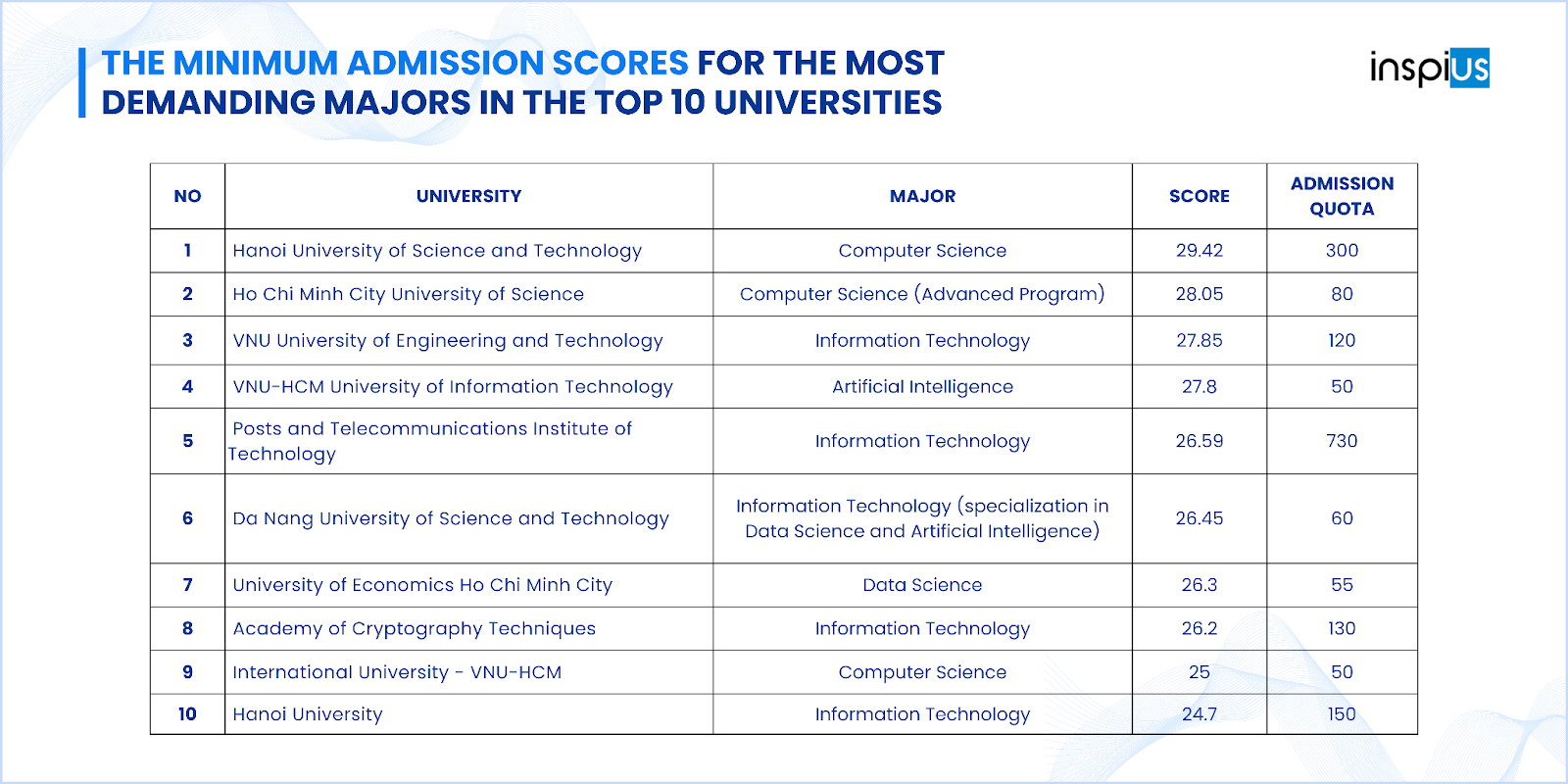
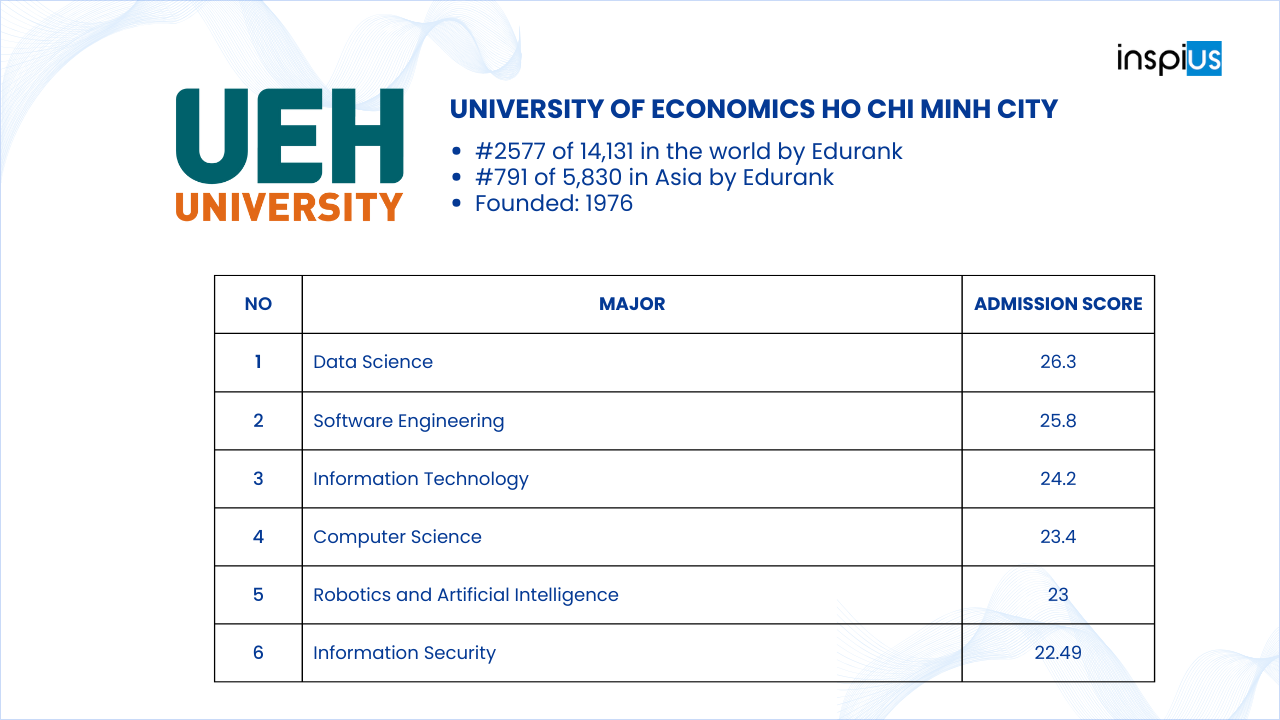
In 2023, the IT sector in Vietnam saw a huge surge in popularity, leading to a lot of applicants and tough competition. As a result, the entrance scores for IT majors soared, becoming some of the highest in the country. Below is a list of the minimum admission scores for the most demanding majors in the top 10 IT universities:
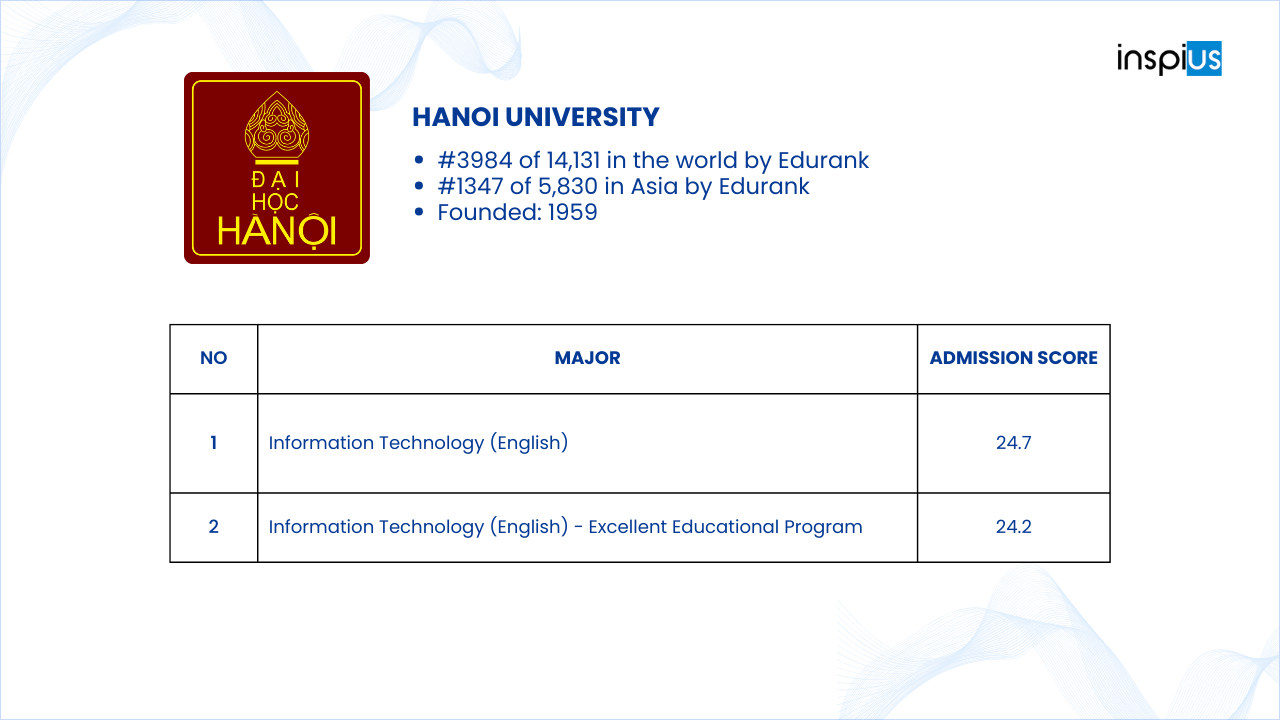
Notably, the Hanoi University of Science and Technology required a minimum score of 29.42 points for the Computer Science major. This means students needed to achieve an average of more than 9.8/10 points in each subject for admission. Other institutions have also achieved remarkably high entrance scores, with the lowest recorded being 8.2/10 points for each subject at Hanoi University.
Hanoi University of Science and Technology
Hanoi University of Science and Technology’s stats
Founded in 1956, Hanoi University of Science and Technology is known as the “MIT of Vietnam” and for its selectivity and successful alumni. The university’s 2021 annual report highlighted that 75.4% of its faculty hold PhDs, the highest percentage in the country. Additionally, 23% of the lecturers have reached the esteemed ranks of Professor or Associate Professor.
Students and alumni of Hanoi University of Science and Technology have gradually made significant contributions and left their mark on positive innovations in the international IT sector. A prime example is Nguyen Ha Dong – the father of “Flappy Bird”.
Nguyen Ha Dong – the father of “Flappy Bird”
Most of us are likely familiar with the smartphone game Flappy Bird. In 2013, this game was launched and quickly became a global phenomenon. After 1 year, Flappy Bird was among the top 10 most searched terms on Google. It was unexpected for many that Flappy Bird was crafted by a Vietnamese programmer, Nguyen Ha Dong. Dong is an alumnus of the Hanoi University of Science and Technology, where he studied Information Systems.
Currently, he continues to develop games with DOTGEARS, the company he founded, specializing in mobile games. Over the past nearly 10 years, Vietnam has seen many individuals bring fame to the nation across various fields. However, Nguyen Ha Dong remains a distinguished figure in the realm of mobile gaming applications, achieving a level of success that few have matched.
VNU University of Engineering and Technology
VNU University of Engineering and Technology’s stats
Despite being established only in 2004, the VNU University of Engineering and Technology quickly became one of Vietnam’s leading universities in technology and engineering education and research, steadily advancing towards international standards.
The university collaborates with numerous prestigious universities and research institutes worldwide, enhancing its training programs and developing a high-quality faculty. Notable collaborations include the BUIL-IT project with Arizona State University in the USA; the VNU-UTS Joint Research & Training Center with the University of Technology Sydney in Australia, offering full scholarships for research students to achieve international qualifications; an IT training program tailored for the Japanese market; and a partnership with the Viettel Research Institute on the Aerospace Engineering Bachelor’s program, among others.
Moreover, cooperation with leading enterprises such as Samsung, Viettel, FPT, Toshiba, and VNPT also raised the standard for the university’s labs.
VNU University of Engineering and Technology is also a place that nurtures numerous talents. Notably, Loi Luu – an alumni of the VNU University of Engineering and Technology has created a miracle in raising capital for the Kyber Network.
Loi Luu – co-founder of Kyber Network
Kyber Network is an on-chain liquidity protocol that aggregates liquidity from all available sources and brings them to one network. Liquidity is a crucial aspect for the success of DeFi applications, especially decentralized exchanges, and this is exactly the problem that Kyber Network aims to solve. It officially launched in September 2017 and raised more than 200,000 Ethereum (equivalent to 60 million USD) in a token offering (crypto-asset). Kyber Network ranked 10th among startups in the world raising the most capital in cryptocurrency at that time.
Loi Luu also gained widespread recognition when being selected in the list of Forbes 30 Under 30 Asia and became a prominent figure in the global blockchain community.
VNU-HCM University of Information Technology
VNU-HCM University of Information Technology’s stats
Since its inception in 2006, the University of Information Technology has swiftly established itself with state-of-the-art facilities that stay ahead of contemporary trends, and a curriculum that blends teaching with research.
In addition, the University of Information Technology maintains partnerships with top corporations like IBM, Microsoft, and SunJava, placing a strong emphasis on English language instruction with international standards. Graduates with international certifications, which facilitates their job applications to global corporations and companies abroad.
“Dionysus” Team – students of VNU-HCM University of Information Technology won first prize at “AI CHALLENGE 2023”
Ho Chi Minh City University of Science
Ho Chi Minh City University of Science’s stats
Ho Chi Minh University of Science, founded in 1942, is a prestigious institution under Vietnam National University, Ho Chi Minh City.
Within its Information Technology faculty and related departments, students are equipped with a solid foundation of knowledge and trained in analytical thinking, supported by a comprehensive and in-depth curriculum. Over more than 25 years, the faculty has established a strong presence and, with government support, has become one of the leading IT departments in Vietnam’s higher education system.
In a notable demonstration of their skills and competitive edge, a team of four students from the Ho Chi Minh City University of Sciences, surpassed thousands of international teams to secure the victory at the IEEEXtreme Programming Competition 2022.
One of the outstanding alumni of this university that must be mentioned is Professor Phan Thanh Nam. In 2020, Professor Phan Thanh Nam was one of the 10 scientists honored with the prestigious European Mathematical Society (EMS) Prize, awarded every four years. This prize is considered one of the most esteemed recognitions in the mathematical community, second only to the Fields Medal by the International Mathematical Union. Professor Phan Thanh Nam is the first Vietnamese recipient of the EMS Prize.
Professor Phan Thanh Nam – the first Vietnamese recipient of the EMS Prize.
Professor Phan Thanh Nam has been invited to present twice at the International Congress on Mathematical Physics, the world’s largest forum in the field, held every three years by the International Association of Mathematical Physics. For a young mathematician like Prof. Nam, being invited to speak twice at this prestigious conference is a significant honor and a testament to his contributions being recognized and valued by the global community of mathematical physicists.
Posts and Telecommunications Institute of Technology
Posts and Telecommunications Institute of Technology’s stats
PTIT students are actively involved in diverse international activities. During the finals of the Global Pitching & Startup Competition hosted within Chung-Ang University’s Metaverse in South Korea, two students from the institution excelled against many strong competitors and won the Gold Prize in the contest. Renowned for its robust reputation, the university produces graduates highly sought after in the job market, providing them with abundant career opportunities upon graduation.
Da Nang University of Science and Technology
Da Nang University of Science and Technology’s stats
With a strong emphasis on practical training and industry-relevant curriculum, Da Nang University of Science and Technology’s core values and mission aims to “provide high-quality human resources, capable of innovation, creativity, and entrepreneurship in the fields of engineering – technology; promoting research and technology transfer for sustainable socio-economic development regionwide, national and worldwide”.
Students are equipped with the necessary skills and knowledge to meet the challenges of the fast-evolving tech sector. In 2023, a total of 2,476 students graduated, achieving an impressive 97% employment rate within the first 12 months post-graduation. Also during this year, the Da Nang University of Science and Technology conferred degrees to nearly 3,000 new doctors, masters, architects, engineers, and bachelor’s degree holders, who subsequently entered the domestic and international job markets.
Synopsys, a prominent technology corporation based in the United States, has recently signed a Memorandum of Understanding (MOU) with Vietnamese authorities to actively contribute to the advancement of the semiconductor industry. A significant portion of the core team at Synopsys, particularly at their Da Nang office, are alumnus of Da Nang University of Science and Technology in electronic-telecommunication and information technology. One exemplary individual is Nguyen Bao Anh, a former student from the class of 2002-2007, who now serves as a Team Leader
Synopsys Corporation signed an MOU with the Department of Information Technology and Communications in Vietnam to develop the semiconductor chip industry
The noteworthy achievements of Team Leader Nguyen Bao Anh and his colleagues shine through in their ability to design and master cutting-edge technology, particularly making a global impact in the field of 3nm Multidie chip technology.
Academy of Cryptography Techniques
Academy of Cryptography Techniques’s stats
The Vietnam Academy of Cryptography Techniques (KMA) is a public university under the Government Cipher Committee of the Ministry of Defence, established on February 17, 1995. It provides undergraduate, postgraduate education, and scientific research in cryptography for Vietnam’s Cipher sector. The academy is also one of the eight key institutions selected by the Vietnamese government for training personnel in information security.
Students from the Academy of Cryptography Techniques won the championship in the Hack A Day 2023 competition
Achieving the highest score of the competition with the earliest completion time, the “KMA.lastdance” team from the Academy of Cryptography Techniques won the championship in Hanoi.
Students of the Academy of Cryptography Techniques also won the First Prize in the ASEAN 2023 Student Competition for Information Security. The competition drew nearly 1,000 participants in 233 teams, representing 63 universities and colleges in Vietnam and 9 ASEAN member countries. This highlights that students of the Academy of Cryptography Techniques are not only talented but also demonstrate a dynamic and proactive approach when participating in endeavors that extend their influence on a broader scale, especially in international areas.
Hanoi University
Hanoi University’s stats
At Hanoi University, students are equipped with solid knowledge and proficient skills that align closely with the demands of the labor market through curricula designed to international standards and high compatibility with advanced programs worldwide.
The Faculty of Information Technology has signed many research cooperation and training agreements with universities and research institutes in various countries such as the University of Central Lancashire (UCLAN) – UK, the University of Victoria – Australia, University of Catania & University of Camerino – Italy, to promote the English Information Technology program. The goal is to provide students with a solid foundation in technology and enterprise information systems, coupled with strong English communication and presentation skills.
The faculty comprises Associate Professors, PhDs, and Masters with extensive experience in teaching and significant scientific research achievements, trained in advanced countries or teaching at high-quality universities. The faculty of Information Technology comprises 28 lecturers with over 90% hold master’s and doctoral degrees obtained from prestigious international universities. Furthermore, the institution consistently hosts visiting professors from numerous universities and research institutes worldwide, fostering exchanges, collaborative research efforts, and direct engagement in teaching for students.
University of Economics Ho Chi Minh City
University of Economics Ho Chi Minh City’s stats
Established in 1976, the University of Economics Ho Chi Minh City (UEH) has become a fully autonomous institution since 2014. It comprises three member colleges: College of Business (COB), College of Economics, Law and Government (CELG), and College of Technology and Design (CTD).
As one of Vietnam’s 19 key national universities, UEH is renowned for its high-impact research culture and extensive academic collaborations with nearly 100 universities worldwide, further enhancing its global reach and impact.
International University is one of seven member universities of Ho Chi Minh City National University, established in December 2003. This is the first multidisciplinary public university in Vietnam to teach completely in English. In 2019, International University was the 3rd institution in Vietnam and the 7th in Southeast Asia to meet AUN accreditation standards at the teaching facility level.
The IT affiliate programs at this university are designed to align with the curricula of top universities worldwide, such as Rutgers University (USA), University of Nottingham (UK), University of New South Wales (Australia), and most recently, the partnership with Deakin University (Australia). Courses are taught by both Vietnamese and international professors, all with high-level expertise, utilizing English-language textbooks from reputable publishers that are widely used in top universities.
Other Prominent Information Technology Universities in Vietnam
In addition to the universities mentioned above, there are other universities in Vietnam known for their excellent IT programs. These institutions have different criteria for admissions compared to the standards we have discussed. However, they are also among the well-regarded universities for their quality education:
FPT University
FPT University’s stats
Established as part of the FPT Corporation, Vietnam’s largest information technology service company, FPT University is a dynamic private university that focuses on delivering a practice-oriented education. The university has an innovative curriculum that is frequently updated to keep pace with global IT trends and collaborates with industry leaders to provide internships and hands-on projects for its students.
FPT University adopts an admission method that does not rely on the national university entrance exam scores. Instead, students are enrolled based on the following criteria:
At FPT University, the IT field is the most reputable and long-standing program. The curriculum is designed based on program recommendations from the Association for Computing Machinery (ACM), top U.S. universities, and software experts from IT organizations and companies such as the Vietnam Software Association (VINASA), FPT, the training programs of EC-Council, and Jetking Hardware & Networking Academy (India); as well as global Art Training schools and the National Association of Schools of Art and Design (NASAD).
FPT University has played a pivotal role in shaping numerous talents, with a notable example being Nguyen Thanh Trung. He is the co-founder and CEO of Sky Mavis, the company behind the wildly successful blockchain game Axie Infinity, which took the world by storm in 2021. Trung is an alumnus of FPT University where he majored in software engineering.
Axie Infinity’s triumph has spurred a trend in blockchain game development both in Vietnam and worldwide. In 2021, Sky Mavis executed two rounds of capital raising. In May 2021, Mark Cuban and a consortium of international investors injected $7.5 million into Sky Mavis. Subsequently, in October 2021, the company secured a series B funding of $152 million, marking one of the largest fundraising deals for startups in Vietnam in the past year.
Ho Chi Minh City University of Technology (HCMUT)
Ho Chi Minh City University of Technology (HCMUT)’s stats
As one of the key universities of Vietnam, Ho Chi Minh City University of Technology (HCMUT) – a member of Vietnam National University, Ho Chi Minh City, consistently ranks among the top engineering institutions. HCMUT is the first and the only university in Vietnam to achieve Accreditation from HCERES (The High Council for Evaluation of Research and Higher Education, Europe) & AUN-QA (ASEAN) at the same time.
HCMUT’s admission criteria for 2023 involve a comprehensive evaluation, considering multiple factors: results of the competency assessment exam of Vietnam National University, Ho Chi Minh City (75%), national university entrance exam scores (20%), highschool GPA (5%) and other personal achievements including academic awards, accomplishments in social activities, and literary achievements.
Beyond its age and reputation, the university is also a breeding ground for national talent. Le Hung Anh (Mr. Jimmy Lee), founder and chairman of BIN Corporation Group, is an alumni of Faculty of Information Technology, Ho Chi Minh City University of Technology.
BIN Corporation Group of Le Hung Anh develops a technology-applied enterprise service ecosystem. Business fields range from information technology services, e-commerce, management consulting, financial consulting, and travel services to real estate. After more than 12 years of operation, the company has expanded its international operations with offices in Hong Kong, Singapore, Lithuania, Canada, the United States and has more than 1 million individual customers and 30,000 corporate customers globally.
Ton Duc Thang University
Ton Duc Thang University’s stats
Ton Duc Thang University has established itself as a prestigious academic institution dedicated to cultivating the next generation of information technology professionals. The Faculty of Information Technology boasts numerous training cooperation programs with industry giants like IBM, LogiGear, and FSOFT, providing students with ample opportunities for practical experience.
In 2023, Ton Duc Thang University enrolls students in 4 methods:
Method 1: High School GPA (Results for 05 semesters, Admission is based on a 40-point scale)
Method 2: National university entrance exam (Total score of subjects according to admission combination (40-point scale, some subjects are multiplied by a coefficient of 2)
Method 3: Direct admission, includes 4 groups:
Direct admission and scholarships for candidates with letters of recommendation from principals of high schools that have signed a cooperation agreement with the university.
Candidates with IELTS 5.0 certificate are considered for admission to university programs in English, IELTS 5.5 are considered for admission to international affiliate programs.;
Candidates who graduated from high school abroad, candidates studying international programs at international schools in Vietnam, candidates with SAT, A-Level, IB, ACT certificates.
Direct admission for students of Vietnam-Finland International School.
Method 4: Results of the competency assessment exam of Vietnam National University, Ho Chi Minh City (minimum of 600/1200 points)
The university consistently hosts seminars, competitions, IT events such as the Wix Website Design Contest, the IT Student and Business Conference, and the Information Technology Talent Competition,… These initiatives are designed to provide students with opportunities to engage in various activities, refine their skills, acquire essential knowledge, ultimately preparing them for a seamless transition into the labor market.
The Future Is Here
Vietnam’s rise in the tech world is mirrored by the performance of its top IT universities. Their commitment to excellence and the measured impact they have on the industry at large place them among the most influential entities in the worldwide tech community. As we look to the future, these universities are set to continue their trajectory, nurturing the next generation of software engineers equipped to drive innovation and excel on the global stage.
Interested in building a tech team in Vietnam? Our assistance can connect you with top-notch software engineers proficient in various technologies to meet your specific requirements. Get in touch with us today!
Ready to hire remote software developers in Vietnam with us?
So, what’s driving these changes? And how do remote and onsite developers compare in the current work scene? Dive into this article as we explore the pros, cons, and key points of each hiring method, offering insights for tech leaders.
Hire Remote Developers vs. Onsite Developers: Pros and Cons
Hiring Remote Developers
The Pros and Cons of Hiring Remote Developers
Pros of Hiring Remote Developers
Broader Talent Pool
Think global, act local – this adage has never been truer than in the realm of remote recruitment. Unrestricted by geographical boundaries, the world becomes your hiring ground. Companies no longer need to confine their search to their city or even their country. According to a survey by FlexJobs, 65% of respondents report wanting to work remotely full-time. This suggests that there’s a vast talent pool of developers worldwide ready and willing to work remotely. By eliminating geographical restrictions, companies can scout the globe for the best fit for their team
Cost efficiency
The fiscal benefits of remote hiring can be game-changing for many businesses. By having remote developers, there are clear savings on physical infrastructure like office space, utilities, and other overhead costs. Companies can expect to spend $7,500–$28,000 in hard costs to find and onboard a new employee, including job board fees, background checks, and the new hire’s training. Soft costs—such as lost productivity—can add up to as much as 60% of the total cost to hire, according to SHRM. The Global Workplace Analytics estimates that a typical employer can save an average of $11,000 per half-time telecommute per year. Furthermore, geo-arbitrage, the practice of leveraging currency differences, means firms can hire top-tier talent from regions with a lower living cost, getting high-quality work without the high salary tag.
Report of Employer Annual Savings by Global Workplace Analytics
Flexibility
With remote developers, the work never sleeps. Companies can harness developers from different time zones, leading to continuous productivity. Teams can potentially function across various time zones, offering round-the-clock productivity.
Diverse perspectives
Global hiring leads to global insights. Developers from diverse geographical and cultural backgrounds can introduce a unique perspective, leading to more creative problem-solving and a broader understanding of global user bases. A report highlights that diverse teams are 45% more likely to improve market share and deliver sustainable growth.
Enhanced employee satisfaction
Happy employees often mean better work. The option to work remotely can greatly enhance job satisfaction, providing developers with the flexibility they crave. During FlexJobs’ 2022 Career Pulse Survey, 84% of respondents stated that a remote or hybrid job would make them a happier person. 68% of people in the State of Remote Work 2023 report by Buffer said that they had a very positive experience with remote work, while 0% negative experience. By catering to this preference, companies can not only attract top talent but also retain them, ensuring longevity and consistency in their projects.
Experience with Remote Work – State of Remote Work 2023 by Buffer
Cons of Hiring Remote Developers
Communication barriers
Being in an office typically facilitates spontaneous and clear communication. However, remote working, which largely depends on digital tools, might not always capture the crispness of direct interactions. This shift often brings forth communication challenges: tasks can be misunderstood, the absence of in-person cues can cause confusion, and the possibility of teams not being in sync can increase.
These challenges stem from various factors, including:
Time zone differences: When teams are spread across various time zones, synchronizing communication becomes trickier.
Technical hurdles: Unreliable internet connections, software errors, and equipment malfunctions can disrupt communication flow.
Missing non-verbal signals: A significant portion of our communication is conveyed without words. We say a lot with our expressions and gestures, which can be hard to catch online and often gets overlooked in digital correspondence.
Security concerns
Remote workers can become one of the biggest threats to your network’s security, putting your company’s data at risk. Working from home can potentially cause data breaches, identity theft, and a host of other negative results. The 2023 World Economic Forum’s (WEF) Global Risks Report, published in January, put cybersecurity in the current and future top 10 risks globally. The cost of cybercrime is projected to hit an annual $10.5 trillion by 2025, according to Cybersecurity Ventures, with remote setups being more vulnerable points of attack.
Issues may include:
Unsecured Wi-Fi networks: Public Wi-Fi, commonly used by remote workers in cafes or public spaces, is often unencrypted. This lack of security makes it easy for hackers to intercept data, leading to potential data breaches or theft.
Unverified third-party apps: In the quest for efficiency, remote workers often download and use third-party applications that haven’t been vetted by their organization. Such apps can serve as entry points for malware or other malicious entities.
Poor data backup procedures: Without standardized backup protocols, important data can be lost due to unforeseen circumstances like device failures or ransomware attacks.
Webcam hacking and Zoombombing: Enterprises increased their use of video conferencing and other online collaboration platforms and so did hackers. Cybercriminals can sabotage or disrupt online conferences or prowl around undetected to obtain information, such as proprietary data or corporate emails, which they can use to their advantage.
The practice of unencrypted file sharing: While organizations may think to encrypt information that’s stored on their network, they may not consider encrypting data when it’s in transit from one place to another. Your employees share so much private data every day that your company cannot afford to not secure this information from being seized by a cybercriminal. If sensitive company information is intercepted, it can lead to identity fraud, ransomware attacks, theft, and more.
Cloud misconfigurations: The cloud is a crucial technology for remote work, although it also comes with risks. Misconfigurations, especially those related to access, pose one such risk. Companies may accidentally give users too much access or fail to implement access controls.
Team cohesion
Creating a close-knit team when everyone’s apart can be tough. It’s often those little moments in an office – like grabbing coffee or a quick chat by a desk – that bring people together. The Gallup State of the Global Workplace report indicates that only 15% of employees feel genuinely engaged in their work when operating in entirely remote environments. The absence of spontaneous coffee breaks, face-to-face team meetings, or casual office banter can create a disconnect among team members, potentially affecting morale and collaboration.
Oversight & productivity
In regular office setups, it’s easier for managers to gauge how things are going just by looking around or having a quick chat. Daily stand-up meetings or quick check-ins, and a shared space promote accountability and teamwork. However, remote work diminishes these oversight methods due to lack of face-to-face interactions, varied time zones, and no common workspace.
While many remote employees have showcased remarkable self-discipline and adaptability, making sure everyone delivers consistently can be a delicate balance. It’s crucial to maintain productivity without stepping over the line into an employee’s personal space or autonomy.
Hiring Onsite Developers
Pros of Hiring Onsite Developers
Immediate collaboration
The immediacy of face-to-face interactions facilitates rapid problem-solving, brainstorming, and ideation. With onsite setups, there’s no delay in communication due to technology hiccups or time zone differences. Teams can convene spontaneously, ensuring that ideas flow seamlessly and doubts are addressed promptly.
Company culture
Nurturing a cohesive and robust company culture becomes more straightforward when employees share the same physical space. Celebrations, team outings, and even casual water cooler chats contribute to a sense of unity and belonging. As global engagement authority Gallup puts it, engagement comes mostly from relationships. When employees have strong relationships with their coworkers, employee engagement rises, and brings all the other benefits you can think of with it. Gallup’s most notable data point demonstrating this is that employees who report having a best friend at work are seven times more likely to be engaged.
Immediate resource access
Having developers work in-house provides them with immediate access to essential organizational assets. From state-of-the-art computing systems to proprietary software and dedicated hardware tools, the availability is streamlined, ensuring efficiency and reducing potential bottlenecks commonly associated with remote access.
Easier supervision
Direct oversight becomes feasible in an onsite setup. Managers can monitor project progression, address concerns, and provide feedback without any latency. Compared to remote work, 67% of supervisors believe they spend more time supervising remote workers than onsite workers. This is because managers can monitor project progression, address concerns, and provide feedback without any latency. Being in the same physical space can expedite the resolution of challenges and help maintain the momentum of a project.
Consof Hiring Onsite Developers
Geographical limitations
One of the inherent limitations of onsite hiring is the geographical constraint. Businesses are often bound by the talent pool within a certain commuting radius, potentially missing out on global talent. According to a recent study by global staffing firm ManpowerGroup, a staggering 77% of employers around the world are experiencing difficulties in filling job vacancies, marking the highest talent shortage in 17 years. This could mean settling for less-than-ideal candidates or enduring lengthy recruitment processes.
Higher overheads
Operating a physical office entails substantial expenses. Beyond the base cost of renting or purchasing space, there are added expenditures for utilities, equipment, and amenities. In fact, annual occupancy costs in Manhattan reached over $169 per square foot in the second quarter of 2021. But if a significant amount of those employees work from home at least some of the time, you’ll be able to downsize to a smaller office and pay less in rent. According to Global Workplace Analytics, a remote workforce helped IBM save $50 million on real estate costs.
Less flexibility
Onsite jobs usually stick to set working hours, making them less flexible than remote positions. For many parents and caregivers, the flexibility of remote work means they can have a better work-life balance and juggle their jobs with looking after their kids or family members. This flexibility of remote work has impacted women, especially with one study finding that women with childcare responsibilities were 32% less likely to leave a job if they had remote work options.
Risk of local market saturation
In certain tech hubs, the demand for developers often outstrips supply, leading to intense competition for top talent. Such competition can inflate wages and make the recruitment process longer and more challenging. Due to the competitive landscape, there’s often an upward pressure on wages. The Robert Half Technology survey indicated that in top tech cities, like San Francisco, competition for IT professionals led to a 7-8% annual increase in salaries on average. This local market saturation can strain resources and delay projects.
Hiring Remote Developers vs. Onsite Developers: Consider Factors to Choose which Model Suits Best for Your Company
Not sure about the right hiring model that suits your company? Use these questionnaires to evaluate your current situation and decide whether to hire remote or onsite developers.
Considering Costs Beyond Salaries
What additional expenses come with having an onsite team, such as office rentals, utilities, and equipment?
Can remote work offer savings, like cutting back on physical office needs or tapping into affordable global talent?
Finding the Right Talent
Does your local talent pool fulfill your company’s software development needs?
Are specific skills you need hard to find locally but accessible through remote recruitment?
Do existing company networks or partnerships make remote hiring easier?
Balancing Productivity and Well-being
Is creating a flexible work environment and ensuring work-life balance a priority for the company?
Have you evaluated how remote work might influence employee motivation and output?
Can the company implement tools and strategies to measure and uphold remote team efficiency?
Infrastructure and Resources
Is the company equipped with the tools and systems (like remote access and secure networks) to facilitate remote work smoothly?
Can the company offer remote developers the essential software, hardware, and resources they need?
Are there potential remote work risks, like data security concerns, that need attention?
Cultivating a Suitable Company Culture
Is your company’s culture aligned with the trust, autonomy, and discipline remote work demands?
Can the company’s existing policies adjust to suit remote work scenarios?
How does the company plan to maintain team unity and a sense of belonging among remote members?
Start Building your Remote Tech Team Today!
Every company has a distinct path to crafting its optimal team. By considering the factors outlined and embracing the possibilities of remote work, organizations can navigate the future of tech with agility and foresight. Whether a burgeoning startup or a seasoned business, it’s prime time to delve into remote tech talent.
Want to scale effortlessly? With Insius by your side, we streamline everything from headhunting to paperwork and managing your IT talents. Our seasoned IT recruiters prioritize not just skills, but also cultural fit and fluent English communication.
Your next game-changing developer might just be a few clicks away. Seize the moment, and start building your future-focused, remote tech team today!
Ready to hire remote software developers in Vietnam with us?